
This tested garlic butter pasta is made in one pot in about 30 minutes. Short shellbow pasta simmers right in chicken broth and half-and-half with butter, fresh garlic and a small blend of dried herbs, then freshly grated Parmesan and a squeeze of lemon turn the liquid into a silky sauce. It serves six.
There is no separate pot of boiling water for this creamy garlic butter pasta. The pasta releases its starch into the broth as it cooks, and that starch is what thickens the sauce once the cheese goes in.
Table of Contents
Garlic Butter Pasta at a Glance
| Serves | 6 |
| Total time | About 30 minutes |
| Pot | 1 soup pot |
| Pasta | ½ lb shellbow pasta, cooked in the sauce |
| Liquid | 2¾ cups chicken broth, ¾ cup half-and-half |
| Flavor | 4 tablespoons butter, 4 cloves garlic, ¾ cup Parmesan, 1 tablespoon lemon juice |
| Seasoning | Dried basil, oregano, parsley, mustard powder, thyme, onion powder and pepper |
| Keeps | 3 to 4 days in the fridge |
Why This One-Pot Garlic Butter Pasta Works
- The garlic blooms in butter with the herbs. Dried herbs and garlic cook together in foaming butter, so their flavor spreads through the whole pot.
- The pasta cooks in the sauce. It soaks up broth and half-and-half instead of plain water.
- Soy sauce and a little bouillon add depth. Just 1 teaspoon of soy sauce and half a bouillon cube make the sauce taste richer without tasting like either one.
- Parmesan goes in over low heat. Stirring it in gradually keeps the sauce smooth.
- Lemon and a final pat of butter finish it. The lemon brightens the cream and the last tablespoon of butter adds gloss.
Ingredient Notes
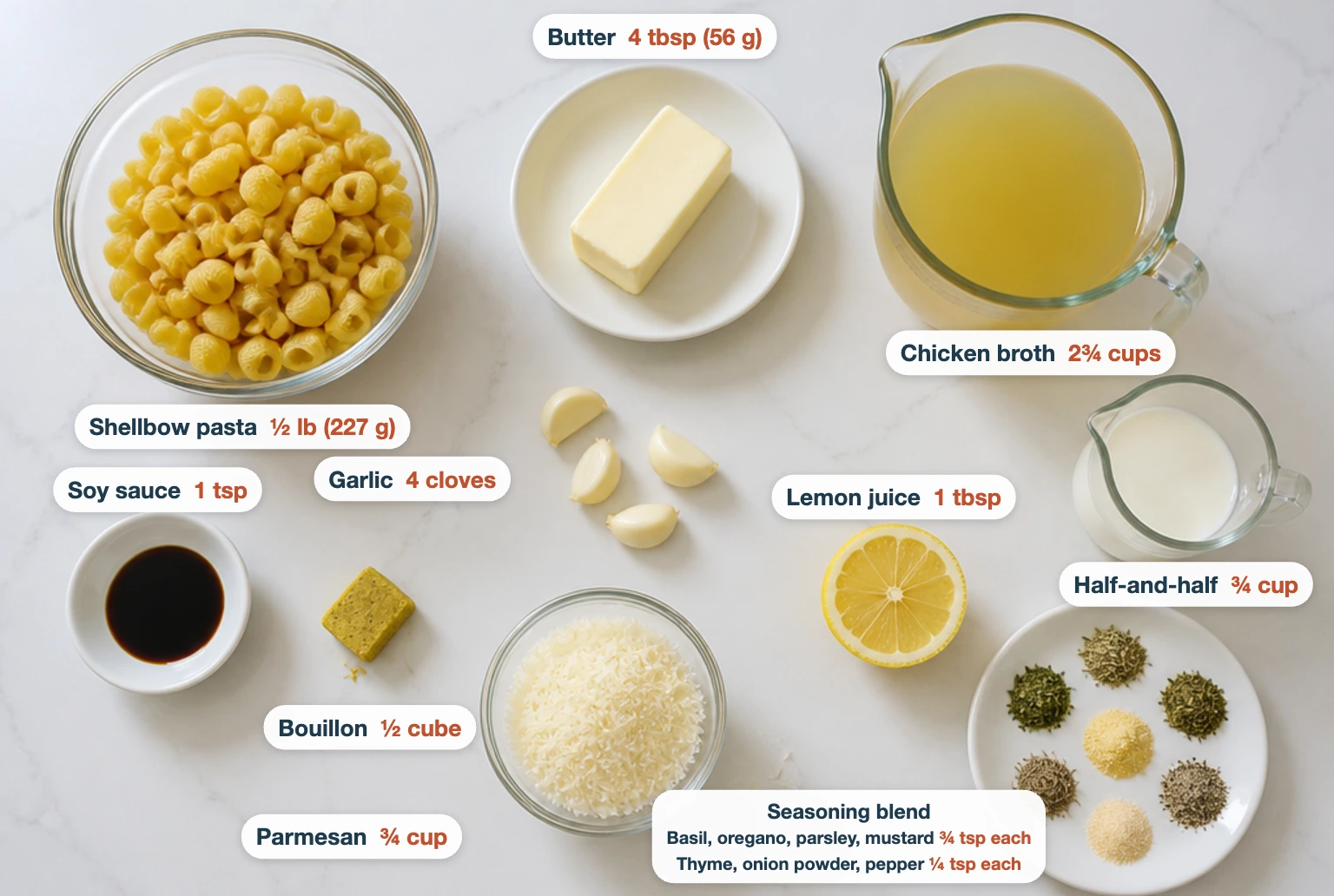
- Shellbow pasta: ½ pound. These are small ridged shells with a curved elbow shape that hold the sauce inside. Cavatappi, medium shells, orecchiette, farfalle or rotini also work.
- Butter: 4 tablespoons, divided. Three go in at the start and one at the very end.
- Garlic: 4 fresh cloves, minced.
- Chicken broth: 2¾ cups.
- Half-and-half: ¾ cup. It makes the sauce creamy without being heavy.
- Soy sauce: 1 teaspoon.
- Chicken bouillon cube: ½ cube, crumbled.
- Parmesan cheese: ¾ cup, freshly grated from a block. Pre-grated cheese does not melt as smoothly.
- Fresh lemon juice: 1 tablespoon.
- Seasoning blend: ¾ teaspoon each of dried basil, dried oregano, dried parsley and mustard powder, plus ¼ teaspoon each of dried thyme, onion powder and pepper.
How to Make Garlic Butter Pasta, Step by Step
1. Prep everything first
This garlic butter pasta moves quickly, so mix the dried seasonings in a small bowl and measure every other ingredient before you turn on the stove. Mince the garlic and grate the Parmesan.
2. Bloom the garlic and herbs
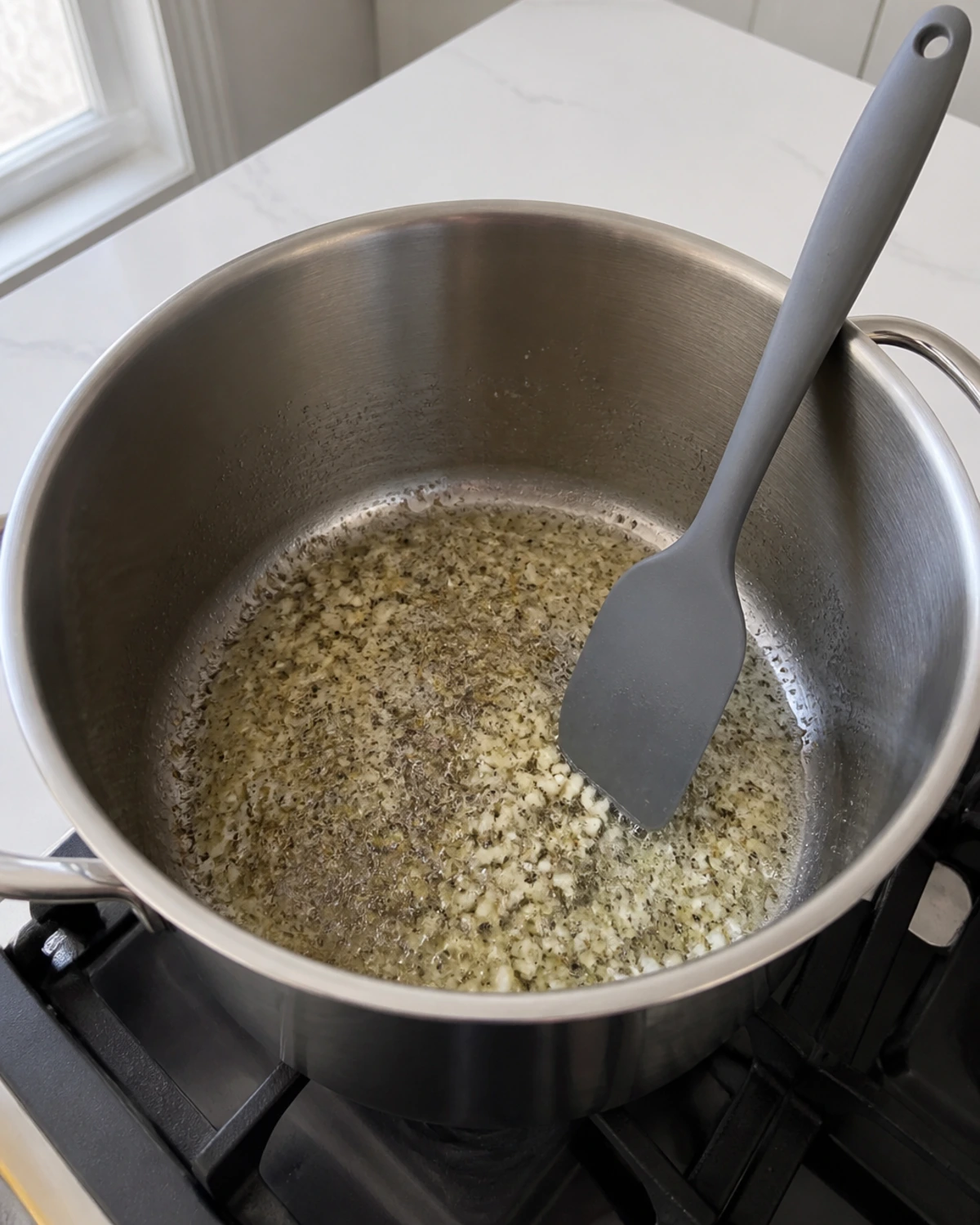
Melt 3 tablespoons of the butter in a soup pot over medium heat. Add the garlic and the seasoning blend and stir constantly until the butter begins to foam.
3. Add the liquids
Pour in the chicken broth and half-and-half, then add the soy sauce and the half bouillon cube.
4. Cook the pasta in the pot
Bring the liquid to a boil and add the dry pasta. Let it return to a gentle boil and cook uncovered for the time on the package. Run a spatula along the bottom of the pot every so often so the pasta does not settle and stick. Taste a piece to make sure it is tender before moving on.
5. Stir in the Parmesan
Turn the heat down to low and add the Parmesan a little at a time, stirring until it melts into the sauce.
6. Add lemon and the last of the butter
Take the pot off the heat and stir in the lemon juice. Drop in the remaining tablespoon of butter, cover the pot for a minute so it melts, then gently stir it through the garlic butter pasta and serve.
How One Pot Makes the Sauce
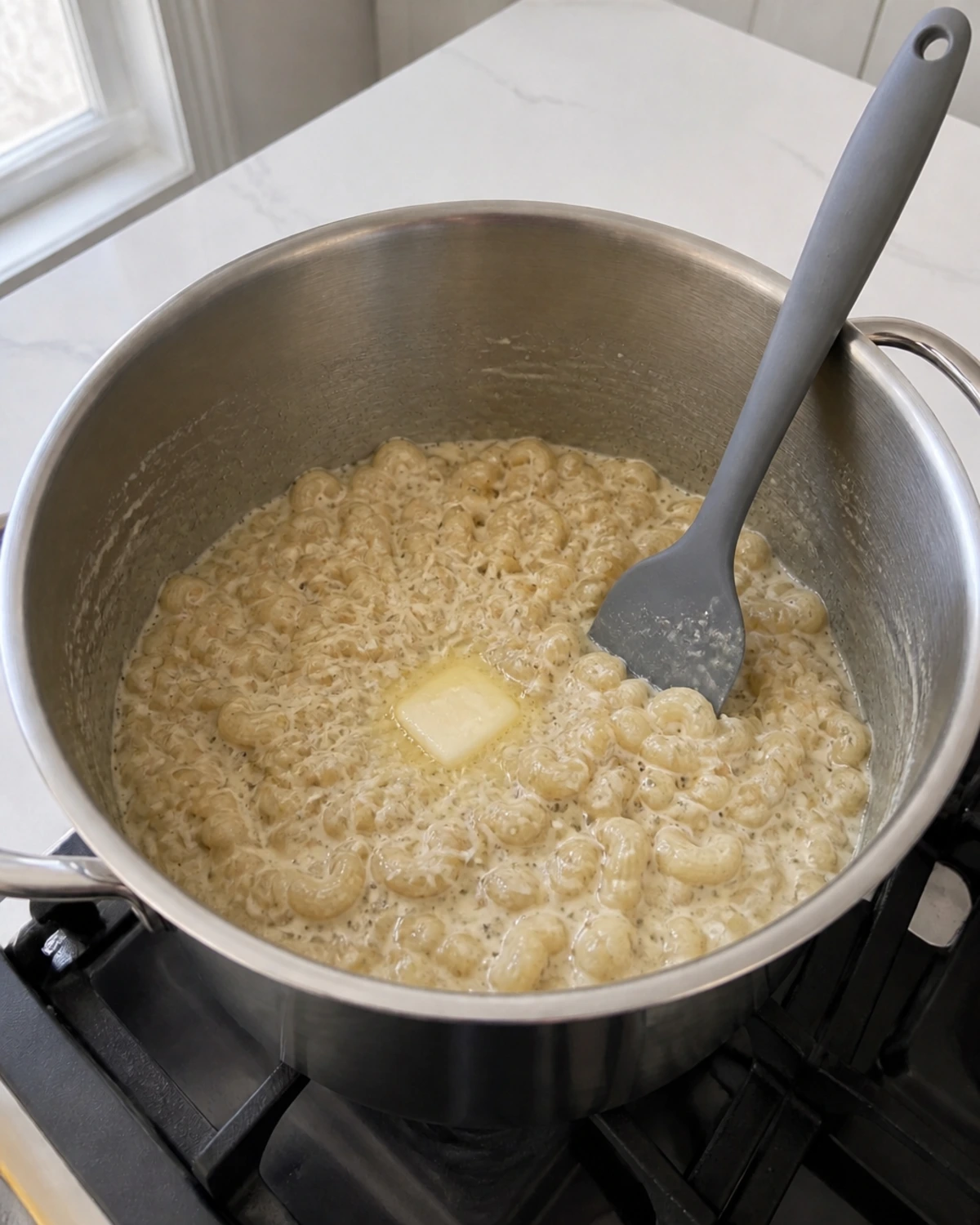
In a regular pot of pasta water, the starch the pasta releases is poured down the drain. Here it stays in the pot. As the shellbows cook in a measured amount of broth and half-and-half, the liquid reduces and the starch thickens it. By the time the pasta is tender, the pot already holds a light sauce, and the Parmesan, lemon and butter finish it. That is why the liquid amounts matter: 2¾ cups of broth and ¾ cup of half-and-half are the tested balance for ½ pound of pasta.
Keep the Pasta Moving
Short pasta likes to sink and settle on the bottom of the pot while it cooks in a creamy liquid. A silicone spatula run along the bottom every minute or so keeps it from sticking and helps it cook evenly. Keep the boil gentle rather than rolling, so the half-and-half does not foam over.
Getting the Garlic Right
Garlic is the star of garlic butter pasta, so cook it gently. Stir it with the herbs in the melted butter over medium heat and add the liquids as soon as the butter starts to foam. At that point the garlic smells sweet and is still pale. If it browns, it turns bitter, and that bitterness carries into the sauce.
Adding the Parmesan
| Do | Why |
|---|---|
| Grate it from a block | Fresh shreds melt quickly and evenly |
| Lower the heat first | Very hot dairy can turn grainy |
| Add it gradually | Each handful blends in before the next |
| Stir as it melts | Keeps the sauce smooth and glossy |
Swapping the Half-and-Half
| Use | Result |
|---|---|
| Half-and-half | The tested default: creamy and light |
| Heavy cream, same amount, plus 1 to 2 tablespoons water | Richer; the water keeps it from getting too thick |
| Whole milk | A thinner sauce |
Choosing the Pasta Shape for Garlic Butter Pasta
Short, sturdy shapes are the right choice for a one-pot garlic butter pasta. They cook evenly in a measured amount of liquid, they do not tangle the way long noodles can, and their ridges and hollows catch the sauce. The tested recipe uses shellbows, and the same amount of any of the shapes below can take their place.
| Shape | Why it works here |
|---|---|
| Shellbow (tested) | Small ridged shells that hold sauce inside the curve |
| Cavatappi | Corkscrew tubes; the spirals trap the Parmesan sauce |
| Medium shells | Cupped shape that fills with sauce |
| Orecchiette | Small, slightly domed discs that hold a little sauce each |
| Farfalle | Bow ties with a firm center and softer edges |
| Rotini | Tight twists that grab the herbs and garlic |
Whatever shape you use, cook it for the time printed on its package and taste a piece before you add the cheese. Package times vary from brand to brand, and that is the most reliable guide.
The Seasoning Blend, Explained
This garlic butter pasta does not rely on garlic alone. A small blend of dried seasonings goes into the butter with the garlic, and each one has a job.
| Seasoning | Amount | What it adds |
|---|---|---|
| Dried basil | ¾ teaspoon | Sweet, herbal background |
| Dried oregano | ¾ teaspoon | A little earthiness |
| Dried parsley | ¾ teaspoon | Color and a mild green note |
| Mustard powder | ¾ teaspoon | Gentle tang that sharpens the cheese |
| Dried thyme | ¼ teaspoon | Light woodsy note |
| Onion powder | ¼ teaspoon | Savory sweetness |
| Pepper | ¼ teaspoon | Mild heat |
Mixing the blend in a small bowl before you start matters more than it sounds. The garlic and herbs need to go into the butter together, and you will not have time to measure seven jars while the butter foams.
Why Soy Sauce and Bouillon?
One teaspoon of soy sauce and half a chicken bouillon cube are small amounts in a pot that holds more than three cups of liquid. You will not taste either one directly. What they do is deepen the savory flavor of the broth so the finished sauce tastes rounder and more seasoned. Both are salty, as is the Parmesan, so taste the pasta at the end before you even think about adding salt.
Butter at the Start and at the End
The 4 tablespoons of butter are split on purpose. Three tablespoons go in first and become the cooking fat for the garlic and herbs, carrying their flavor through the whole pot. The last tablespoon goes in after the pot is off the heat. Covering the pot for a minute lets it melt gently, and stirring it through at the very end gives the sauce a glossy finish and a fresh butter flavor that would be lost if it had simmered with everything else.
Why the Lemon Goes in Last
One tablespoon of fresh lemon juice is just enough to lift a rich, creamy sauce without making it taste lemony. It goes in after the pot comes off the heat so it stays bright. Fresh juice from a real lemon works best here, and half a lemon is usually more than enough.
How Garlic Butter Pasta Sauce Should Look
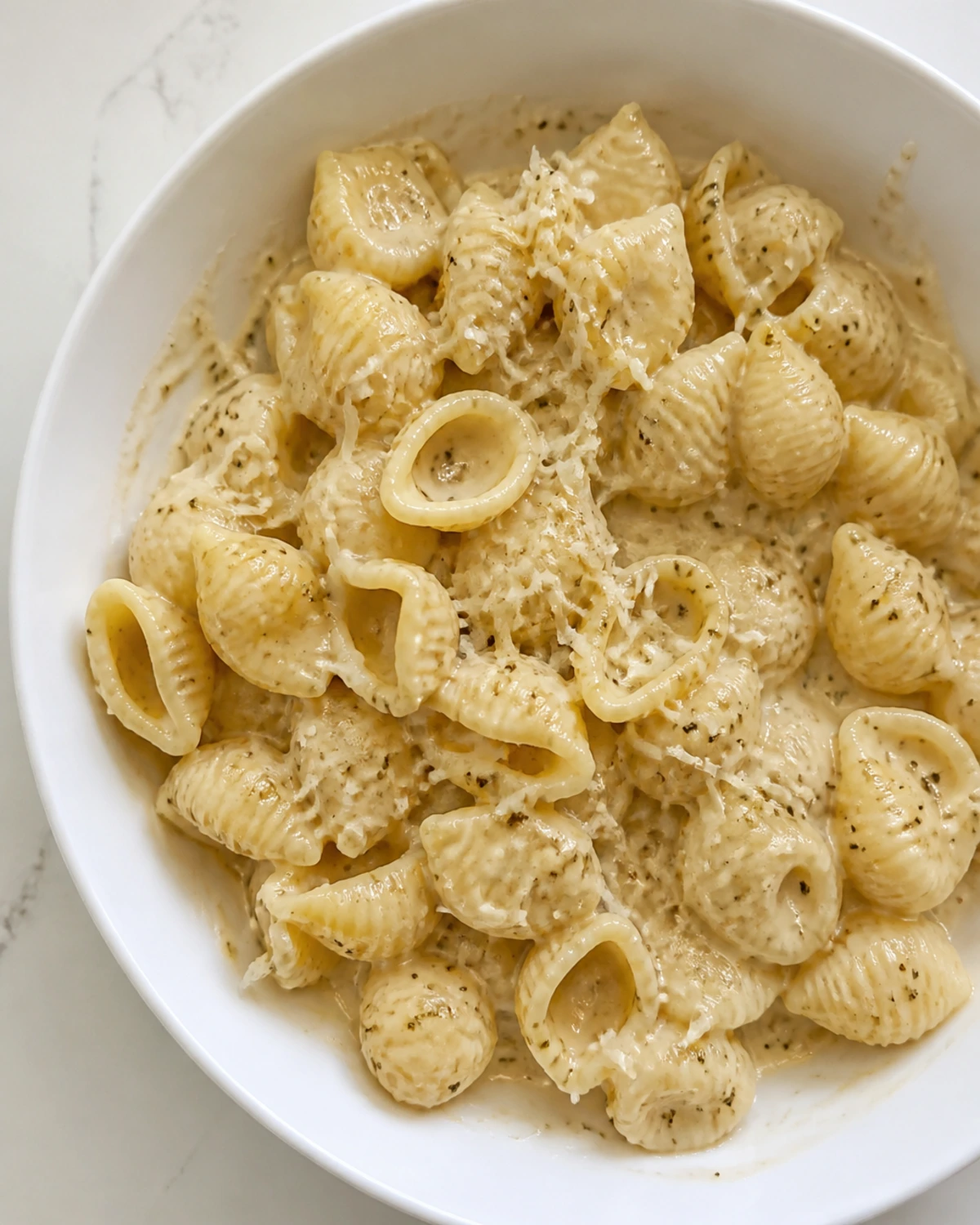
When the pasta is tender, the liquid in the pot will look loose and milky. After the Parmesan goes in, it turns smooth and creamy and coats the shells. It should still be a little saucy in the bottom of the pot when you serve it, because short pasta keeps absorbing liquid as it sits. If it tightens up before it reaches the table, a splash of warm broth loosens it again.
The Right Pot
Use a soup pot or a Dutch oven with a heavy bottom. A heavy base spreads the heat evenly, which helps keep the half-and-half from scorching while the pasta cooks. A pot that is wide enough to stir comfortably also makes it easier to run the spatula along the bottom. A thin saucepan heats unevenly and makes sticking more likely.
Step Timing
- Mix the seasonings, mince the garlic and grate the Parmesan: about 10 minutes.
- Melt the butter and bloom the garlic and herbs: until the butter foams.
- Add the liquids and bring them to a boil: a few minutes, depending on your stove.
- Cook the pasta: the time on the package.
- Stir in the Parmesan, lemon and last tablespoon of butter: a few minutes.
The 30-minute total comes from the tested recipe. The individual step times depend on your stove and your pasta.
Serving Size
This garlic butter pasta recipe makes six servings from ½ pound of pasta. That is a generous side dish portion for six, or a lighter main course. Serve it with a protein and a vegetable to make a full dinner for the family.
Kid-Friendly Notes
Garlic butter pasta is an easy dinner to serve to children. The sauce is mild and creamy, the shells are easy to eat with a spoon or fork, and there is nothing spicy in it. The quarter teaspoon of pepper is spread through six servings, so it is barely noticeable. If your kids are wary of green flecks, the dried herbs are small and blend into the sauce once it is stirred.
A Good Recipe for New Cooks
This is an easy garlic butter pasta to learn on. It uses one pot, there is no draining of boiling water, and the steps are simple. It teaches two skills that are useful in many other recipes: cooking garlic gently in butter without browning it, and melting cheese into a sauce over low heat. Read the recipe through once, measure everything first, and keep a spatula moving in the pot.
Common Mistakes to Avoid
- Skipping the prep. The garlic and herbs cook quickly, so have everything measured before you start.
- Browning the garlic. Add the liquids as soon as the butter foams.
- Adding the pasta before the liquid boils. The cooking time will be off.
- Not stirring. Short pasta settles and sticks to the bottom of the pot.
- Adding cheese over high heat. Turn the heat down to low first.
- Using pre-grated Parmesan. It does not melt as smoothly as freshly grated cheese.
- Salting too early. The broth, bouillon, soy sauce and Parmesan already bring salt.
Troubleshooting
| Problem | Likely cause | Fix |
|---|---|---|
| Pasta stuck to the pot | It settled on the bottom | Run the spatula along the bottom of the pot throughout cooking |
| Sauce is grainy | Cheese added over high heat | Lower the heat first and add the Parmesan gradually |
| Sauce is too thin | Pasta not fully cooked, or whole milk used | Cook the pasta until tender and give the sauce a minute to settle |
| Sauce is too thick | Heavy cream used without water | Add 1 to 2 tablespoons of water or broth |
| Garlic tastes bitter | Garlic browned | Add the liquids as soon as the butter foams |
| Cheese did not melt | Pre-grated Parmesan | Grate a block of Parmesan yourself |
Easy Swaps
| Instead of | Use |
|---|---|
| Shellbow pasta | Cavatappi, medium shells, orecchiette, farfalle or rotini |
| Half-and-half | Heavy cream plus 1 to 2 tablespoons water, or whole milk for a thinner sauce |
Storage and Reheating
- Refrigerate: leftover garlic butter pasta in an airtight container for 3 to 4 days.
- Reheat: warm it gently on the stove with a splash of broth, stirring, since the sauce thickens in the fridge.
For general guidance on keeping leftovers, see the cold food storage chart on FoodSafety.gov.
What to Serve With Garlic Butter Pasta
Garlic butter pasta is a full meal on its own or a side dish. It goes well with chicken piccata, roasted pork tenderloin or any simple grilled chicken, plus a green salad or roasted vegetables.
More quick pasta dinners: garlic parmesan pasta, lemon shrimp pasta, chicken alfredo pasta and Italian sausage pasta.
Garlic Butter Pasta FAQ
How long does garlic butter pasta take?
About 30 minutes from start to finish, including prep.
Do I boil the pasta separately?
No. The dry pasta goes straight into the boiling broth and half-and-half and cooks in the same pot.
What pasta shape is best?
The tested recipe uses shellbow pasta. Cavatappi, medium shells, orecchiette, farfalle and rotini all work too.
Can I use heavy cream instead of half-and-half?
Yes. Use the same amount and add 1 to 2 tablespoons of water so the sauce does not get too thick. Whole milk also works but makes a thinner sauce.
Why add soy sauce and bouillon?
They add savory depth. The amounts are small, so the garlic butter pasta does not taste like soy sauce.
Why did my sauce turn grainy?
The heat was too high when the cheese went in, or the cheese was pre-grated. Lower the heat and add freshly grated Parmesan a little at a time.
Can I make it ahead?
It is best served right away. Leftovers keep 3 to 4 days in the fridge; reheat with a splash of broth.
Garlic Butter Pasta (One Pot)
Ingredients
Method
- Combine the dried basil, oregano, parsley, mustard powder, thyme, onion powder and pepper in a small bowl. Measure the remaining ingredients.
- Melt 3 tablespoons of the butter in a soup pot over medium heat. Add the garlic and the seasoning blend and stir constantly until the butter starts to foam.
- Add the chicken broth, half-and-half, soy sauce and bouillon cube.
- Bring to a boil and add the pasta. Return to a gentle boil and cook uncovered according to the package directions, running a spatula along the bottom of the pot often so the pasta does not settle. Taste to make sure it is tender.
- Reduce the heat to low and gradually stir in the Parmesan until melted.
- Remove from the heat and stir in the lemon juice.
- Add the remaining 1 tablespoon of butter, cover the pot until it melts, then gently stir it into the pasta and serve.
Notes
- Main ingredient Pasta
- Method One pot
- Ingredients 16
- Steps 7
- Protein 12 g per serving
Nutrition Facts
Amount per serving (recipe makes 6 servings)
- Total Fat 16 g21%
- Saturated Fat 9.4 g47%
- Cholesterol 42 mg14%
- Sodium 792 mg34%
- Total Carbohydrate 32 g12%
- Dietary Fiber 1.5 g5%
- Sugars 2.9 g
- Protein 12 g24%
* Percent Daily Values are based on a 2,000 calorie diet. Nutrition is calculated per serving from the ingredients listed in this recipe.
Love this recipe? Save it for later!