
This tested roasted pork tenderloin is rubbed with dried herbs, seared until golden, and roasted at 400°F for about 15 minutes in a simple pan sauce made with white wine, beef broth, butter, garlic and onion. After a 10-minute rest it slices into juicy, light pink rounds. It serves six.
In any pork tenderloin recipe, the challenge is the same: pork tenderloin is lean and cooks fast, so it is easy to dry out. Searing first, roasting briefly and resting in the pan sauce is what keeps this one tender.
Table of Contents
Roasted Pork Tenderloin at a Glance
| Serves | 6 |
| Pork | 2 lb pork tenderloin |
| Oven | 400°F |
| Sear | About 6 minutes total, on all sides |
| Roast | 15 minutes, or 13 for thinner tenderloins |
| Rest | 10 minutes, in the skillet |
| Done at | 145°F in the thickest part |
| Slice | ¾ inch thick |
| Keeps | 3 days in the fridge, 3 months in the freezer |
Why This Pork Tenderloin Recipe Works
- A dry herb rub. Rosemary, oregano, thyme, sage and paprika season the surface and help form a crust.
- Searing before roasting. It builds a golden crust and leaves browned bits in the pan that flavor the sauce.
- A pan sauce made first. The pork roasts sitting in wine, broth, butter, garlic and onion, which keeps it moist.
- A short roast at high heat. Fifteen minutes at 400°F cooks this narrow cut without drying it.
- A full rest. Ten minutes lets the temperature finish rising and keeps the juices in the meat.
Ingredient Notes
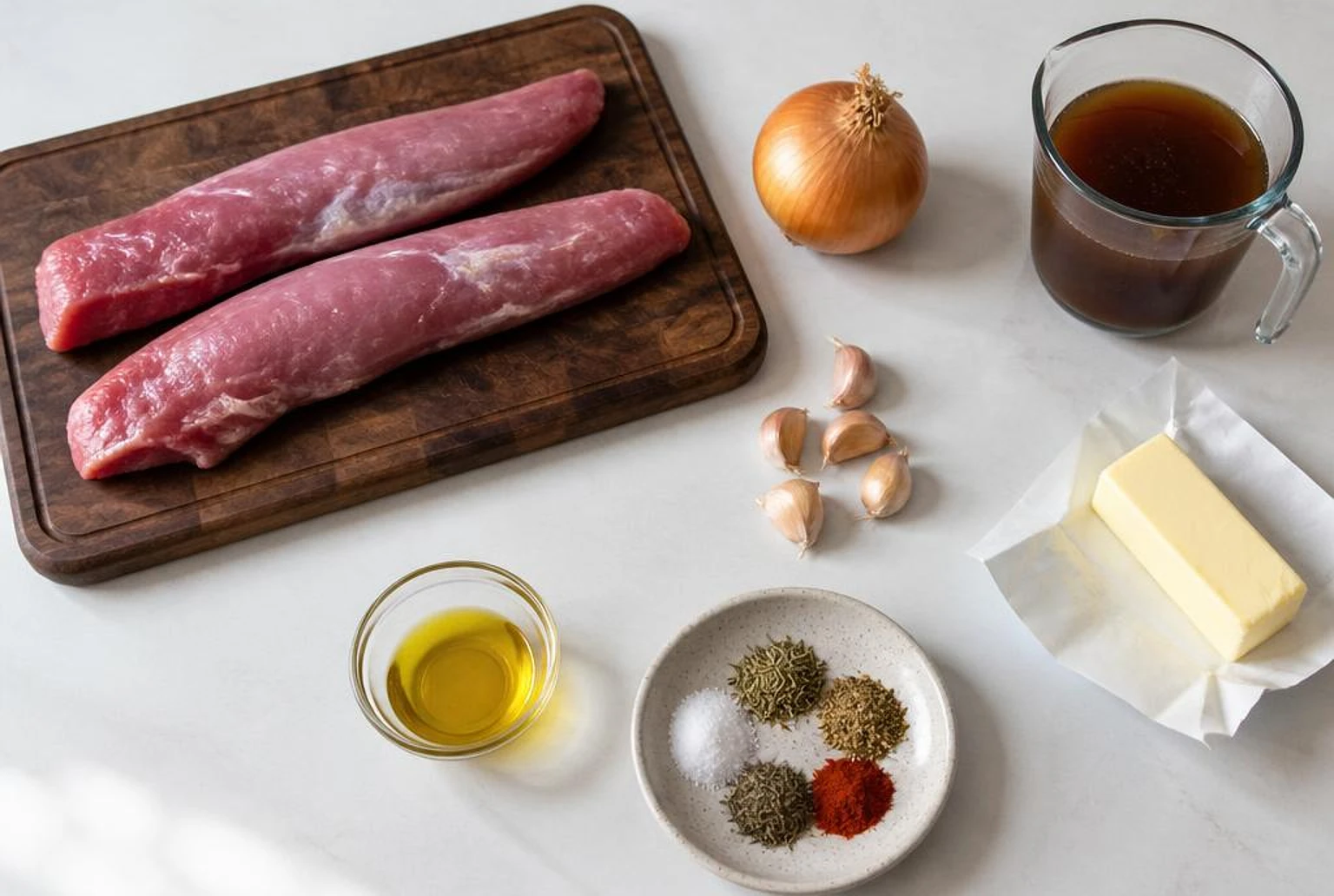
- Pork tenderloin: 2 pounds. One pound also works with the same time and temperature. Halve the seasoning for 1 pound.
- Seasoning rub: 1 teaspoon each of salt, dried rosemary, dried oregano and dried thyme, and ¼ teaspoon each of ground sage, paprika and pepper.
- Olive oil: 1 to 2 tablespoons for searing.
- Dry white wine: ½ cup, such as Pinot Grigio or Chardonnay. Chicken or beef broth can replace it.
- Butter: 2 tablespoons.
- Beef broth: 1½ cups.
- Garlic: 5 cloves, peeled and smashed.
- Onion: 1 yellow onion, thickly sliced.
- Fresh thyme: 3 sprigs, optional.
How to Make Roasted Pork Tenderloin, Step by Step
1. Heat the oven
To start the roasted pork tenderloin, preheat the oven to 400°F.
2. Season the pork
Combine the salt, rosemary, oregano, thyme, sage, paprika and pepper in a small bowl. Pat the pork completely dry and rub the seasoning over all of its surfaces.
3. Sear
Heat the olive oil in a large, wide, oven-safe skillet over medium-high heat. The oil is ready when the pork sizzles as it goes in. Sear the pork on all sides until golden, about 6 minutes in total. Move it to a plate. Turn off the heat and let the skillet cool for about a minute.
4. Make the pan sauce
Add the wine to the skillet and set the heat to medium. Add the butter, beef broth, garlic, onion and thyme. Scrape up the browned bits from the bottom and bring the sauce to a boil. Let it reduce for 5 minutes, then take it off the heat and let it cool for 2 minutes.
5. Roast
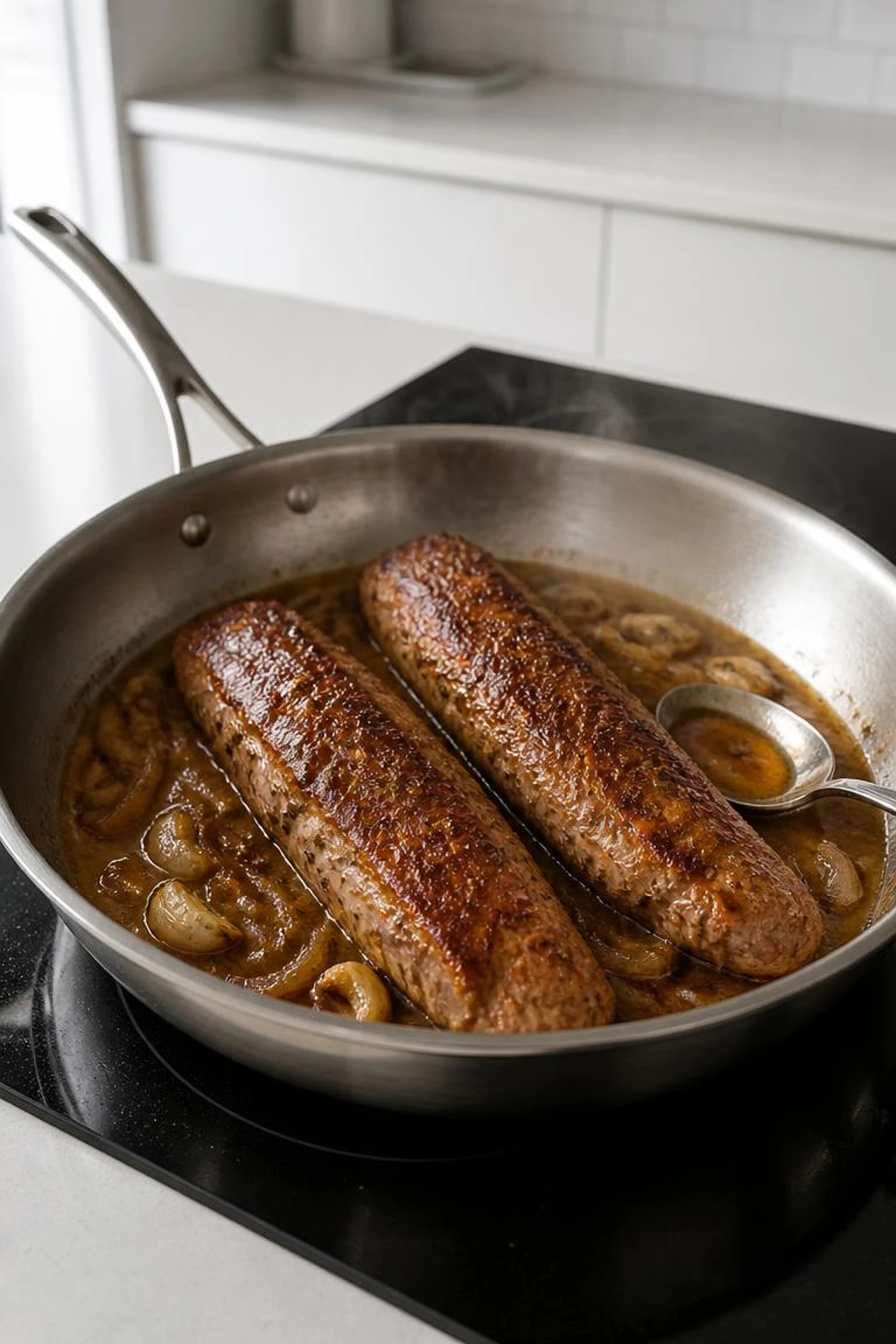
Return the pork to the skillet with any juices from the plate. Roast, uncovered, for 15 minutes. Thinner tenderloins need about 13 minutes.
6. Rest
Take the skillet out of the oven and spoon the pan sauce over the pork. Let it rest in the skillet for a full 10 minutes. Remember that the handle is very hot.
7. Check the temperature
Insert a digital thermometer into the thickest part. It should read 145°F. If it does not, return the pork to the oven briefly.
8. Slice and serve
Slice the roasted pork tenderloin into ¾-inch pieces and drizzle with the pan sauce.
How to Turn the Pan Sauce Into Gravy
For a thicker gravy, pour the pan sauce into a measuring cup and add beef broth until you have 2 cups. Melt 3 tablespoons of butter in a saucepan, add 3 tablespoons of flour and stir for 1 minute. Slowly whisk in the sauce and broth mixture. Bring it to a gentle bubble and let it thicken. A few drops of browning sauce give it a darker color.
Pork Tenderloin vs. Pork Loin
| Pork tenderloin | Pork loin | |
|---|---|---|
| Shape | Long and narrow | Wide and thick |
| Fat | Very little | A fat cap on top |
| Cooking | Quick, at high heat | Longer and slower |
| This recipe | Yes | No |
This matters for roasted pork tenderloin. The names are similar and the two cuts sit next to each other at the store, so they are easy to mix up. Check the label. A tenderloin usually weighs about a pound and often comes two to a package. This recipe is written for tenderloin, and the times will not work for a loin roast.
Why Pat the Pork Dry?
Moisture on the surface of meat has to evaporate before browning can begin. On a cut as lean and quick-cooking as pork tenderloin, that delay matters. Wet pork steams in the pan and turns grey, and by the time it finally browns, the outside is overcooked. Dry pork browns as soon as it touches hot oil. Use paper towels, press firmly and dry every side before you add the rub. The dried herbs also stick better to a dry surface.
Searing on All Sides
- Use a wide skillet. The tenderloins should lie flat with space around them.
- Wait for the sizzle. The oil should be hot enough that the pork sizzles on contact.
- Turn with tongs. Give each side about a minute and a half, about 6 minutes in total.
- Do not cook it through. The sear is for color and flavor. The oven does the cooking.
What Goes Into the Pan Sauce
| Ingredient | Amount | What it adds |
|---|---|---|
| Dry white wine | ½ cup | Acidity, and it lifts the browned bits |
| Butter | 2 tablespoons | Richness and body |
| Beef broth | 1½ cups | A deep, savory base |
| Garlic | 5 cloves, smashed | Mellow, sweet garlic flavor |
| Yellow onion | 1, thickly sliced | Sweetness, and it softens into the sauce |
| Fresh thyme | 3 sprigs, optional | A fresh herbal note |
The skillet cools for a minute before the wine goes in, so it does not splatter. After the sauce reduces for 5 minutes, it cools for 2 minutes more before the pork goes back. The pork then roasts sitting in the sauce, which protects the lean meat from the dry heat of the oven.
Why Resting Matters
When the roasted pork tenderloin comes out of the oven, the pork is not quite finished. During the 10-minute rest, heat keeps moving from the outside of the meat to the center, and the internal temperature continues to rise. The juices, which were pushed toward the middle by the heat, also settle back through the meat. Slice it too early and they run out onto the cutting board. Rest it in the skillet, with the pan sauce spooned over the top.
Using a Meat Thermometer
A digital thermometer is the only reliable way to know when pork tenderloin is done. Insert the probe into the thickest part, from the side, so the tip sits in the center of the meat. Look for 145°F after the rest. Tenderloins vary in thickness, which is why the recipe gives a range of 13 to 15 minutes and tells you to check.
Slicing
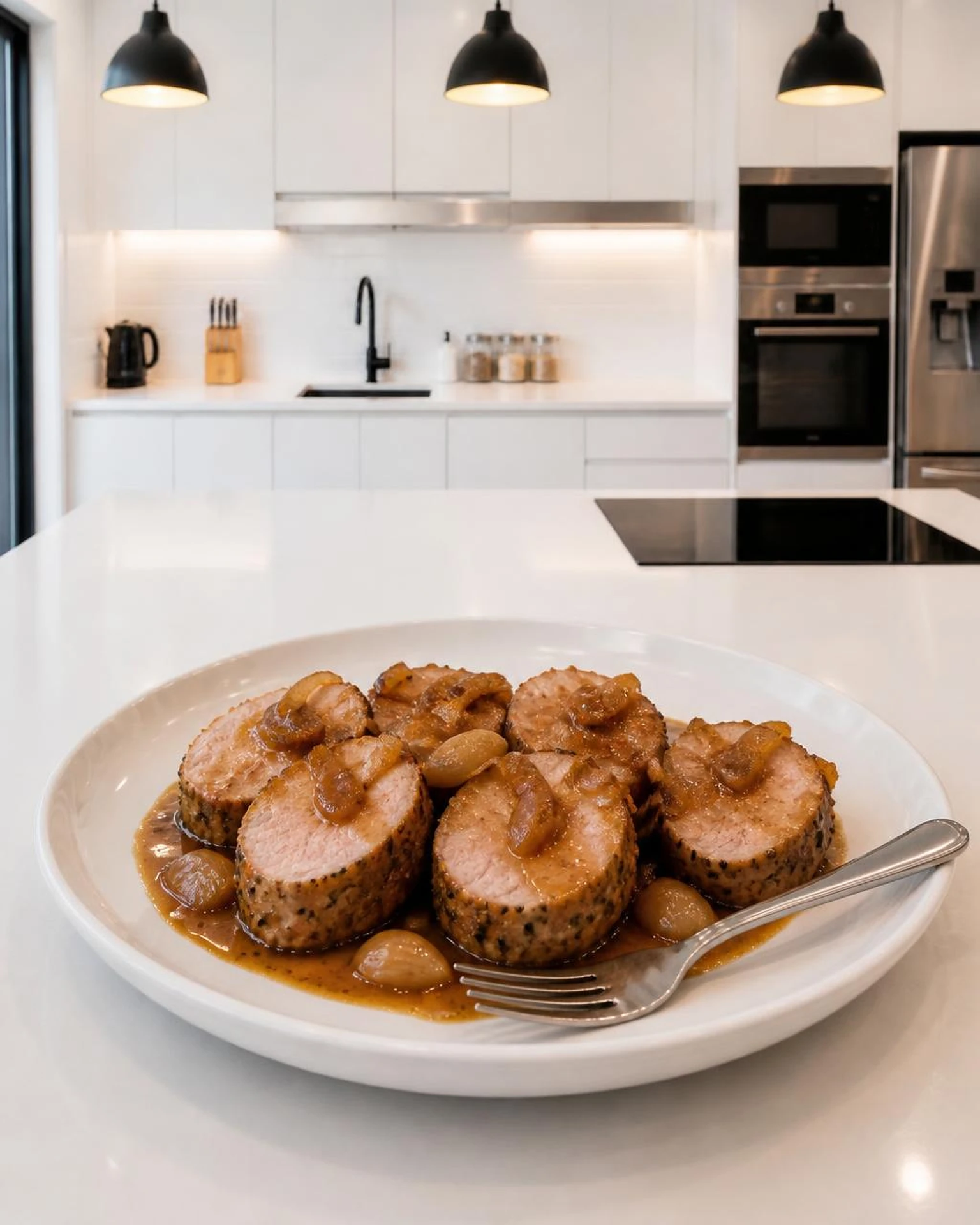
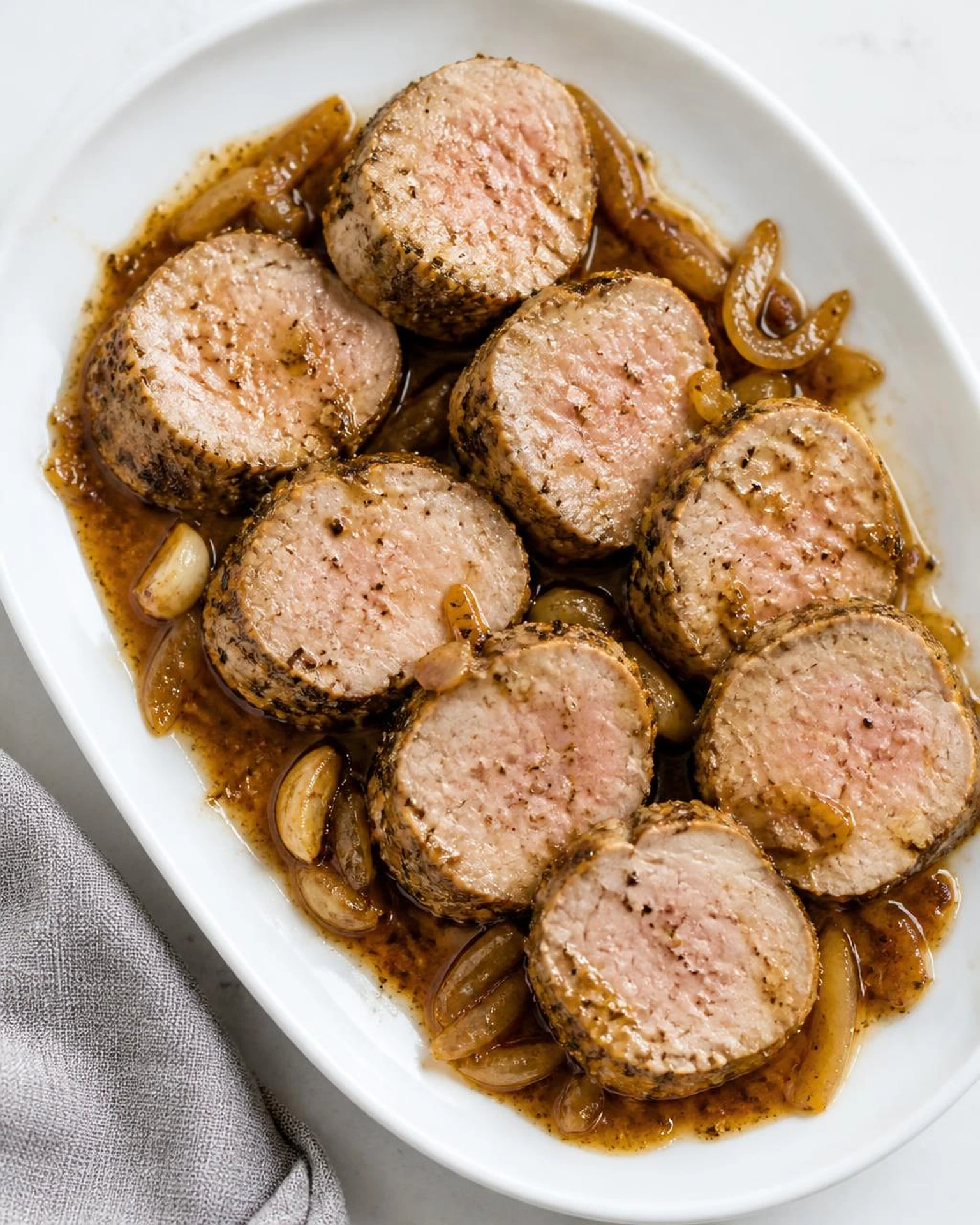
To slice roasted pork tenderloin, use a sharp knife and cut straight across the tenderloin into ¾-inch slices. Each one should have a seasoned, golden edge and a light pink, juicy center. Lay the slices on a plate, slightly overlapping, and spoon the pan sauce with its onions and garlic over the top.
The Herb Rub
| Seasoning | Amount | What it adds |
|---|---|---|
| Salt | 1 teaspoon | Seasons the meat and helps the crust form |
| Dried rosemary | 1 teaspoon | A piney, woodsy flavor that suits pork |
| Dried oregano | 1 teaspoon | A slightly peppery, savory note |
| Dried thyme | 1 teaspoon | Earthy warmth |
| Ground sage | ¼ teaspoon | The classic herb for pork |
| Paprika | ¼ teaspoon | Color and mild sweetness |
| Pepper | ¼ teaspoon | A little bite |
Mix the rub in a small bowl first, so every part of the pork gets the same blend. Press it on with your hands, turning the tenderloins to coat the ends as well as the sides. There is no oil in the rub. The olive oil goes into the skillet, which gives a cleaner sear.
Choosing a Skillet
A 12-inch oven-safe skillet is the right size for 2 pounds of pork tenderloin. Enameled cast iron is ideal, because it sears well, moves from the stovetop to the oven, and is not affected by the wine. Stainless steel with a metal handle works equally well. Check that the handle and any knobs are rated for 400°F. If they are not, sear and make the sauce in the skillet, then transfer the pork and sauce to a baking dish for the oven.
Trimming the Tenderloin
Pork tenderloin often has a thin, shiny membrane along one side, called silver skin. It does not soften when cooked, and it can make the meat curl in the pan. To remove it, slide the tip of a sharp knife under one end of the membrane, angle the blade slightly upward, and cut along its length while pulling the strip away with your other hand. Many tenderloins are sold already trimmed, so look before you start.
Timing Guide
- Mix the rub and season the pork: about 5 minutes.
- Sear on all sides: about 6 minutes.
- Make and reduce the pan sauce: about 7 minutes, including cooling.
- Roast: 13 to 15 minutes.
- Rest: 10 minutes.
Those step times come from the tested recipe. Altogether, dinner is on the table in under an hour, and most of that time is hands-off.
Serving for a Crowd
The recipe serves six. For a larger group, cook more pork and double the pan sauce and the gravy, so there is enough to go around. The roasting time and temperature stay the same, since they depend on the thickness of each tenderloin, not on how many are in the pan. Use two skillets or a large baking dish if they do not fit in one pan with space between them.
What to Do With Leftovers
Cold roasted pork tenderloin slices thinly and cleanly, so it is very good in sandwiches the next day. For a hot meal, reheat the slices gently in a covered dish with a little broth so they stay moist. Any extra pan sauce is worth keeping too. It is good spooned over pan-seared chicken.
Common Mistakes to Avoid
- Buying pork loin by accident. Check the label.
- Skipping the pat-dry. The pork will not brown.
- Adding wine to a scorching pan. Let it cool for a minute first.
- Roasting too long. Fifteen minutes is enough.
- Skipping the rest. Give it the full 10 minutes.
- Grabbing the handle. It stays hot for a long time after the oven.
Troubleshooting
| Problem | Likely cause | Fix |
|---|---|---|
| Pork is dry | Overcooked | Roast 13 to 15 minutes, rest 10, and check for 145°F |
| No golden crust | Pork was wet, or the pan was not hot | Pat completely dry and wait for the oil to sizzle |
| Pork is under 145°F after resting | A thick tenderloin | Return it to the oven briefly |
| Sauce splattered | Wine added to a very hot pan | Turn off the heat and let the skillet cool for a minute first |
| Juices ran out when slicing | Sliced too soon | Rest the full 10 minutes |
| Gravy is too thick | Too much flour for your taste | Use 2 tablespoons of flour instead of 3 |
| Skillet is not oven-safe | Plastic or wooden handle | Move the pork and sauce to an oven-safe baking dish before roasting |
Easy Swaps
| Instead of | Use |
|---|---|
| ½ cup white wine | ½ cup chicken or beef broth |
| 2 lb pork | 1 lb, with half the seasoning and the same time and temperature |
| Butter | A plant-based butter, for dairy-free |
| Pan sauce | Gravy, made from the pan sauce |
| One batch of sauce | A double batch of pan sauce and gravy for a larger amount of pork |
Storage and Reheating
- Refrigerate: leftover roasted pork tenderloin in an airtight container for up to 3 days.
- Freeze: for up to 3 months. The pork freezes and reheats well.
- Reheat: in a covered casserole dish at 325°F until heated through, about 15 minutes. Add a few tablespoons of water or broth to keep the pork moist.
Roasted pork tenderloin is safe at 145°F followed by a rest. See the safe minimum internal temperature chart on FoodSafety.gov.
What to Serve With Roasted Pork Tenderloin
Roasted pork tenderloin goes with almost any side. Mashed potatoes or a buttery pasta soak up the pan sauce, and roasted vegetables complete the plate. This garlic parmesan pasta is ready in the time the pork rests.
More dinners to try: pork stew, chicken piccata, skillet cornbread and slow cooker beef stew.
Roasted Pork Tenderloin FAQ
How long do you roast pork tenderloin at 400°F?
About 15 minutes after searing, or 13 minutes for thinner tenderloins, followed by a 10-minute rest.
What temperature should pork tenderloin be?
145°F in the thickest part, checked after the rest.
Is pork tenderloin the same as pork loin?
No. They are different cuts, and the cooking methods are not interchangeable. Tenderloin is narrow and lean, and it is cooked quickly at high heat.
Do I have to sear it first?
For roasted pork tenderloin, searing is recommended. It builds the crust and leaves the browned bits that flavor the pan sauce.
Is it okay if the pork is pink?
Yes. At 145°F, roasted pork tenderloin is light pink and juicy.
Can I make it without wine?
Yes. Roasted pork tenderloin works without wine. Use chicken or beef broth in its place.
Can I cook just one pound?
Yes. For oven roasted pork tenderloin, the time and temperature stay the same. Halve the seasoning.
What if my skillet is not oven-safe?
Move the seared pork and the pan sauce to an oven-safe baking dish before roasting.
How thick should I slice it?
Slice roasted pork tenderloin about ¾ inch thick.
How do I reheat pork tenderloin?
Reheat roasted pork tenderloin in a covered dish at 325°F for about 15 minutes, with a few tablespoons of water or broth.
Roasted Pork Tenderloin
Ingredients
Method
- Preheat the oven to 400°F.
- Combine the seasonings. Pat the pork completely dry and rub the seasoning over all surfaces.
- Heat the olive oil in a large oven-safe skillet over medium-high heat. Sear the pork on all sides until golden, about 6 minutes total. Transfer to a plate. Turn off the heat and let the skillet cool for about a minute.
- Add the wine and set the heat to medium. Add the butter, beef broth, garlic, onion and thyme. Scrape up the browned bits and bring to a boil. Reduce for 5 minutes, then remove from the heat and cool 2 minutes.
- Return the pork and its juices to the skillet. Roast uncovered for 15 minutes, or 13 minutes for thinner tenderloins.
- Spoon the pan sauce over the pork and rest in the skillet for 10 minutes.
- Check that the thickest part reads 145°F. If not, return to the oven briefly.
- Slice into ¾-inch pieces and drizzle with the pan sauce.