
This tested chicken piccata starts with chicken breasts pounded thin, dredged in flour, Parmesan and garlic powder, and seared until golden. The sauce is made in the same skillet from white wine, garlic, capers, chicken broth and fresh lemon juice, then finished with cold butter so it turns glossy and smooth. It serves four.
In this chicken piccata recipe, the cutlets are only a quarter inch thick, so they cook in minutes and stay tender. The sauce is light and bright, with plenty left over to spoon onto pasta.
Table of Contents
Chicken Piccata at a Glance
| Serves | 4 |
| Chicken | 2 large boneless, skinless breasts, halved lengthwise and pounded to ¼ inch |
| Dredge | Flour, Parmesan, garlic powder, salt, pepper |
| Sear | 3 to 4 minutes per side, medium-high heat |
| Sauce | White wine, garlic, capers, chicken broth, lemon juice, butter |
| Pan | 1 large skillet |
| Safe chicken temperature | 165°F |
| Keeps | 3 days in the fridge, 3 months in the freezer |
Why This Chicken Piccata Recipe Works
- Thin, even cutlets. Pounding the chicken to a quarter inch means it cooks fast and evenly, and stays tender.
- Parmesan in the dredge. It browns with the flour and gives the crust a savory, nutty flavor.
- The wine is reduced almost completely. It lifts the browned bits from the pan and concentrates before the broth goes in.
- The chicken finishes in the sauce. A few minutes back in the pan lets the crust soak up flavor and thickens the sauce slightly.
- Cold butter at the end. Swirled in over low heat, it makes the sauce silky.
Ingredient Notes
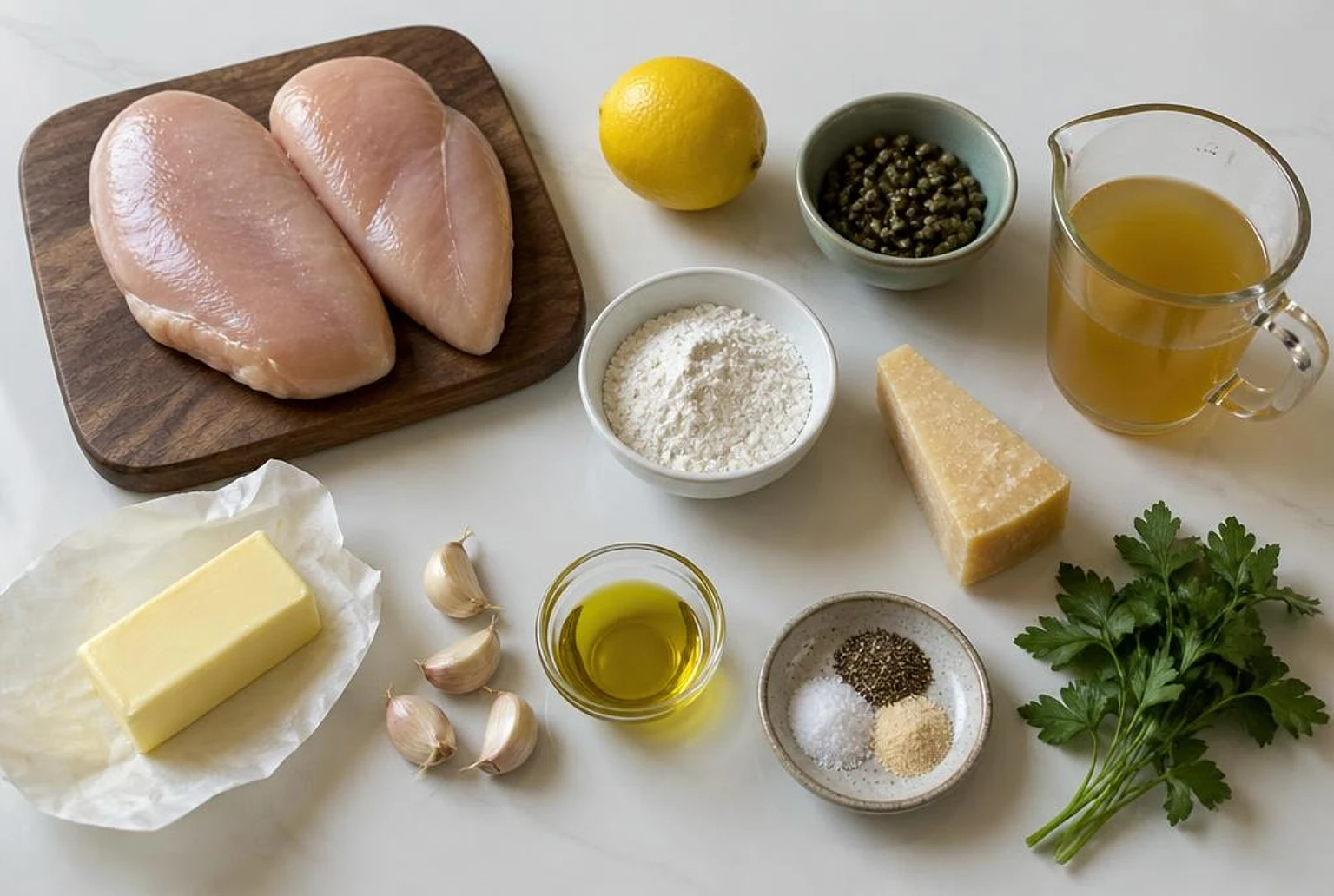
- Chicken: 2 large boneless, skinless breasts, each cut in half lengthwise to make 4 cutlets.
- Dredge: ⅓ cup of flour, ¼ cup of finely grated Parmesan, 1 teaspoon of garlic powder, 1 teaspoon of salt and ½ teaspoon of pepper.
- Olive oil and butter: 3 tablespoons of oil and 1 tablespoon of salted butter for searing.
- Dry white wine: ½ cup, such as Chardonnay or Pinot Grigio. Without wine, use the same amount of extra chicken broth.
- Garlic: 4 fresh cloves, thinly sliced.
- Capers: 2 tablespoons, drained.
- Chicken broth: 1 cup.
- Lemon juice: 2 tablespoons, freshly squeezed.
- Cold butter: 2 tablespoons of salted butter, straight from the fridge, to finish the sauce.
- Fresh parsley: ¼ cup, roughly chopped.
How to Make Chicken Piccata, Step by Step
1. Mix the dredge
To start the chicken piccata, on a large plate, combine the flour, Parmesan, garlic powder, salt and pepper.
2. Cut and pound the chicken
Cut each chicken breast in half lengthwise. Place each piece between sheets of plastic wrap and pound it with a meat tenderizer until it is about ¼ inch thick. Five minutes in the freezer first makes the chicken firmer and easier to slice.
3. Dredge
Pat the chicken dry. Press each side into the flour mixture, then tap off the excess.
4. Sear
Heat the olive oil and 1 tablespoon of butter in a large skillet over medium-high heat. Sear the chicken in batches for 3 to 4 minutes per side, until a golden crust forms. Add a little oil or lower the heat if needed. Move the chicken to a plate and turn off the heat.
5. Reduce the wine
Pour in the wine and set the heat to medium. Let it bubble gently for 4 to 5 minutes, until only a small amount of liquid remains. Scrape up the browned bits with a silicone spatula as it reduces. Add the wine carefully, since hot oil left in the pan can splatter.
6. Build the sauce
Add the sliced garlic and cook for 1 minute. Add the capers, chicken broth and lemon juice, and stir.
7. Return the chicken
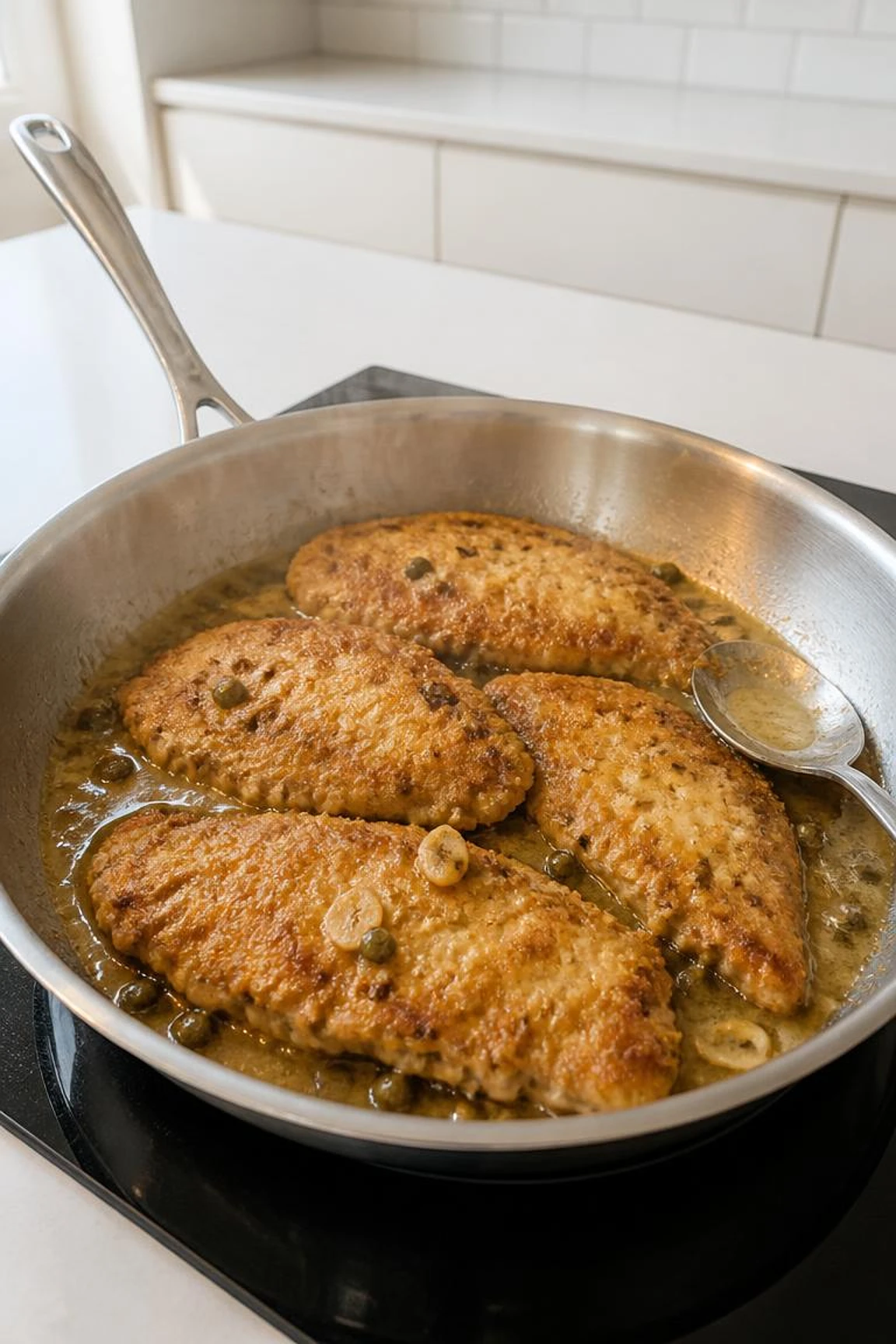
Put the chicken back in the pan along with any juices from the plate. Spoon the sauce over it, cover partially and cook for 3 to 5 minutes. The sauce thickens slightly.
8. Finish with butter
Reduce the heat to low. Add the 2 tablespoons of cold butter and let it melt, swirling the pan so it blends into the sauce. Spoon the sauce over the chicken and take the pan off the heat.
9. Serve
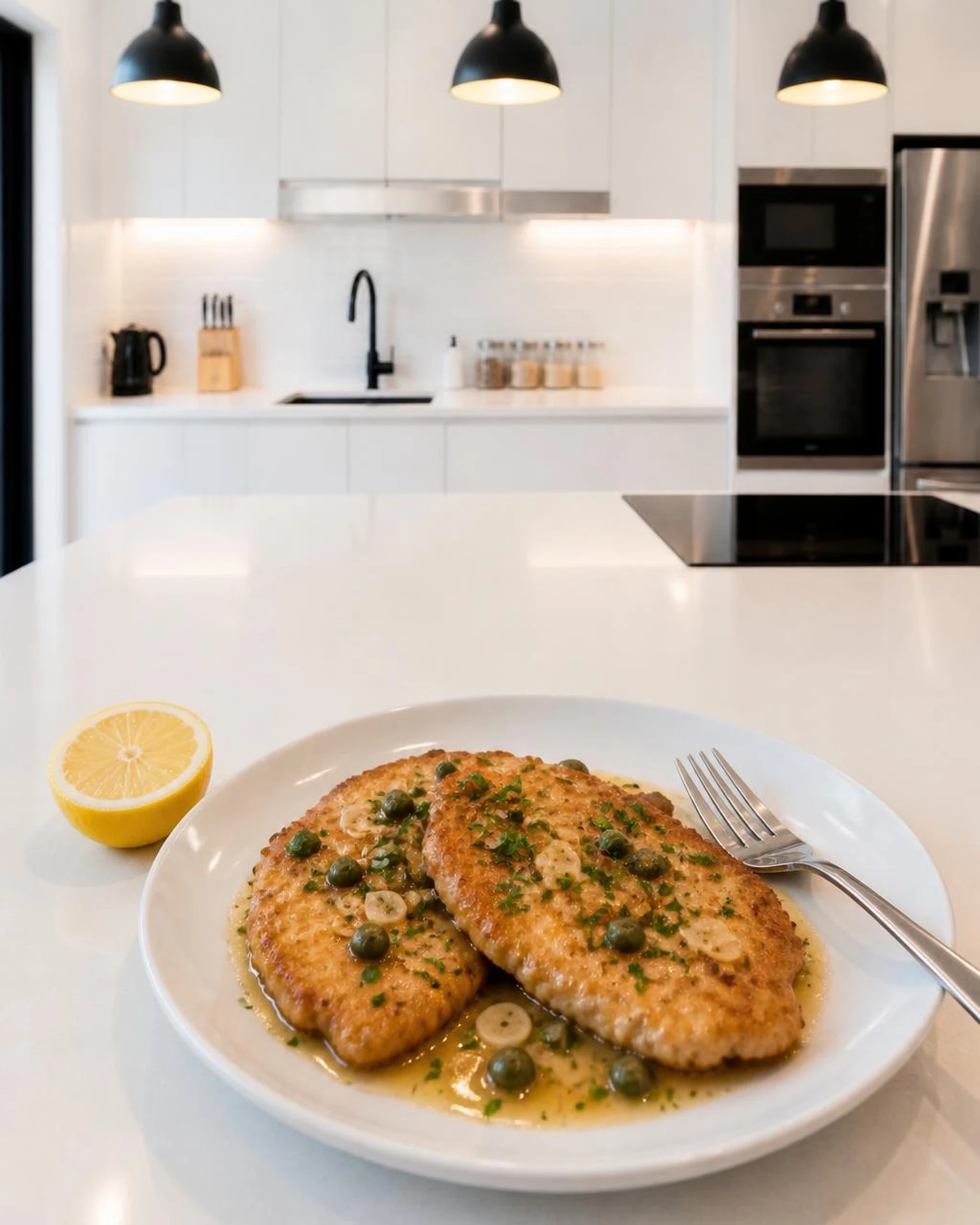
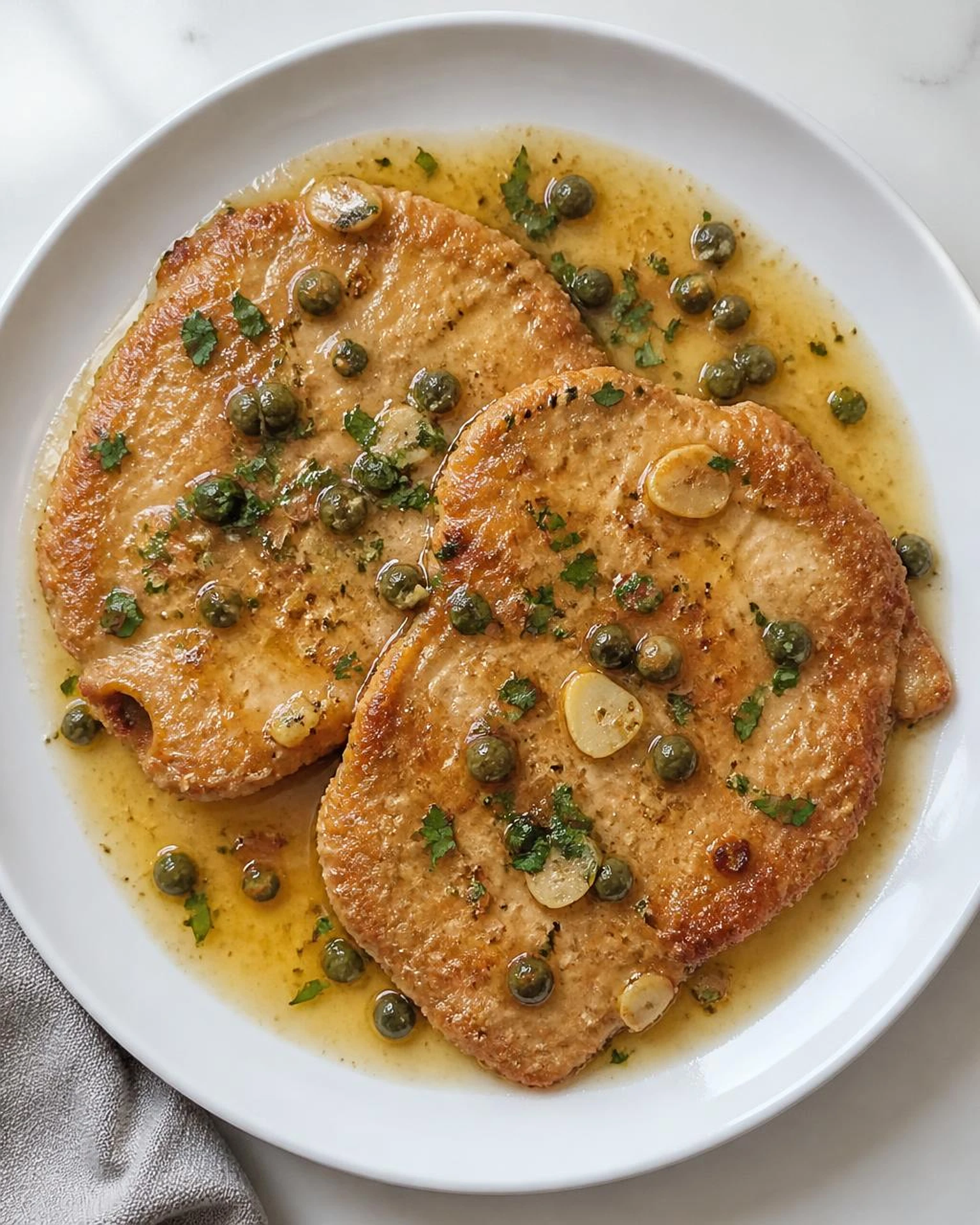
Garnish the chicken piccata with the parsley. Serve with garlic Parmesan pasta, buttered noodles or a creamy lemon pasta, with extra sauce spooned over the top.
How to Pound Chicken Thin
- Chill it briefly. About 5 minutes in the freezer firms up the meat and makes the lengthwise cut cleaner.
- Cover it. Plastic wrap on both sides keeps the meat from tearing and the counter clean.
- Work from the center out. Use firm, even strokes with the flat side of a meat tenderizer.
- Aim for ¼ inch all over. Even thickness matters more than shape.
Chicken plumps as it cooks, so a cutlet that looks very thin when raw ends up at a good thickness on the plate.
Why Dredge the Chicken?
In chicken piccata, the thin coating of flour and Parmesan does three things. It dries the surface of the chicken, so it browns instead of steaming. It forms a golden crust that protects the lean meat from the heat of the pan. And when the chicken goes back into the skillet, a little of that coating dissolves into the liquid and gives the sauce a light body. That is why the sauce thickens slightly during the last few minutes, with no cream or cornstarch.
Dredge the chicken right before it goes into the pan. If floured cutlets sit, the coating turns damp and pasty and will not crisp. Tap off the excess so the crust stays thin.
Getting a Golden Crust
- Oil plus butter. The oil handles the heat, and the butter adds flavor and helps the browning.
- Wait for the shimmer. The fat should be hot before the chicken goes in.
- Do not crowd the pan. Two cutlets at a time in a 12-inch skillet is about right.
- Leave them alone. Let the first side cook for the full 3 to 4 minutes before turning.
- Adjust as you go. If the flour darkens too fast, lower the heat. If the pan looks dry, add a little oil.
Understanding the Sauce
| Ingredient | Amount | What it adds |
|---|---|---|
| Dry white wine | ½ cup | Acidity and depth. It dissolves the browned bits in the pan |
| Garlic | 4 cloves, sliced | Mellow, sweet garlic flavor |
| Capers | 2 tablespoons | Salty, briny pops |
| Chicken broth | 1 cup | Savory body and most of the liquid |
| Lemon juice | 2 tablespoons | Brightness |
| Cold butter | 2 tablespoons | A smooth, glossy finish |
The order matters. The wine goes in alone and reduces until very little is left, which removes its raw edge. The garlic follows, briefly, so it softens without browning. The broth and lemon juice come last, and the chicken returns to finish cooking.
What Are Capers?
Capers are the small, unopened flower buds of the caper bush, pickled in brine or packed in salt. They taste salty, tangy and a little floral, and they are what gives piccata its character. Drain them before using, so the brine does not make the sauce too salty. Because capers, salted butter and broth all contain salt, taste the finished sauce before you add any more.
Slicing the Garlic
This recipe calls for thinly sliced garlic, not minced. Slices cook more gently and are less likely to burn in a hot pan. They turn soft and sweet in the sauce and stay visible on the plate. Use a sharp knife and cut across each clove into thin rounds.
Choosing the Wine
For chicken piccata, use a dry white wine such as Chardonnay or Pinot Grigio. It should be a wine you would drink, though it does not need to be expensive. As it reduces, the alcohol cooks off and the flavor concentrates, leaving acidity and a little fruit that the lemon then builds on. Sweet wines make the sauce taste unbalanced. If you prefer to cook without wine, the tested substitute is the same amount of extra chicken broth. Reduce it the same way, so you still pick up the browned bits from the pan.
The Butter Finish, Explained
Stirring cold butter into a warm sauce at the very end is a classic French technique. Because the butter is cold and the heat is low, it melts slowly and stays blended with the liquid instead of separating into a layer of fat. The result is a sauce that is slightly thicker, glossy and rounder in flavor, with the sharp edges of the lemon and wine softened. Swirl the pan, or stir gently, and stop as soon as the butter has disappeared. Do not let the sauce boil afterward.
Why the Chicken Goes Back in the Pan
After searing, the cutlets are golden outside but may not be fully cooked in the center. The 3 to 5 minutes they spend in the simmering sauce, partially covered, finishes them gently. It also seasons them. The crust absorbs lemon, garlic and caper flavor, and the juices that collected on the resting plate go back into the sauce. The crust softens a little during this step. That is expected in piccata, where the coating is meant to carry sauce, not stay crunchy.
How Much Sauce Does It Make?
This chicken piccata sauce makes more than you need for the chicken alone, and that is deliberate. With a cup of broth, lemon juice and butter, there is enough to spoon over every cutlet and still have plenty for pasta or noodles. If you are serving the chicken with vegetables instead, you can simmer the sauce a minute or two longer before adding the butter, so it reduces a little more.
Choosing a Skillet
For chicken piccata, a 12-inch stainless steel skillet is the best tool here. Stainless steel builds the browned layer that flavors the sauce, and it handles the acidity of wine and lemon without any problem. A nonstick pan works for the chicken, but it leaves fewer browned bits behind, so the sauce has a little less depth. Whatever you use, make sure it is large enough for all four cutlets to lie flat when they go back in.
Serving Chicken Piccata for Guests
Chicken piccata is a good dinner-party dish because it looks elegant and most of the work can be done in advance. Pound and season the chicken earlier in the day and keep it covered in the fridge. Slice the garlic, drain the capers, juice the lemon and chop the parsley. Then the cooking itself takes about 25 minutes. The cooked chicken and sauce can also be refrigerated together for up to 2 days and reheated gently in a covered skillet.
Common Mistakes to Avoid
- Skipping the pounding. Thick chicken cooks unevenly and dries out at the edges.
- Dredging too early. The coating turns gummy.
- Crowding the skillet. The cutlets steam.
- Leaving the heat on when the wine goes in. Turn it off first to avoid splatter.
- Not reducing the wine enough. The sauce will taste sharp.
- Adding the finishing butter over high heat. It separates. Use low heat and cold butter.
Timing the Meal
To serve chicken piccata with pasta, start the pasta water before you sear the chicken. The sauce takes about 10 minutes once the cutlets are out of the pan, so drop the pasta when the wine goes in. Both will be ready together, and the extra sauce can go straight onto the noodles.
Troubleshooting
| Problem | Likely cause | Fix |
|---|---|---|
| Coating fell off | Chicken was wet, or too much flour | Pat dry, press the dredge on, and tap off the excess |
| Crust is pale | Pan not hot enough, or crowded | Use medium-high heat and sear in batches |
| Crust is burning | Heat too high for a thin cutlet | Lower the heat and add a little oil |
| Chicken is dry | Cutlets uneven, or cooked too long | Pound to an even ¼ inch and sear 3 to 4 minutes per side |
| Wine splattered | Hot oil left in the pan | Turn off the heat first and pour the wine in carefully |
| Sauce is too salty | Capers, salted butter and broth together | Drain the capers and taste before adding any salt |
| Sauce looks greasy | Butter added over high heat | Reduce to low and swirl in cold butter |
Easy Swaps
| Instead of | Use |
|---|---|
| ½ cup white wine | ½ cup extra chicken broth |
| Cooking it right before dinner | Make it ahead and refrigerate the chicken and sauce together for up to 2 days |
Storage and Reheating
- Refrigerate: leftover chicken piccata in an airtight container for up to 3 days.
- Freeze: for up to 3 months.
- Reheat on the stove: in a covered skillet over low heat. Add a splash of broth if the sauce has thickened, and do not let it boil.
- Reheat in the oven: in a covered baking dish at 325°F for 15 to 20 minutes. If you have time, let it sit at room temperature for 20 to 30 minutes first.
The chicken in chicken piccata should reach 165°F. See the safe minimum internal temperature chart on FoodSafety.gov.
What to Serve With Chicken Piccata
Chicken piccata makes more sauce than the chicken needs, on purpose. Serve it over something that can soak it up. Pasta is the usual choice. This lemon shrimp pasta sauce shows the same lemon and garlic flavors in a creamy form, and plain buttered noodles work just as well.
More chicken dinners: chicken pomodoro, easy chicken Parmesan, chicken alfredo pasta and chicken mozzarella pasta.
The classic side for this dish is garlic parmesan pasta, a one-pot angel hair that is ready in about 20 minutes.
Another quick skillet dinner with a pan sauce: roasted pork tenderloin.
Chicken Piccata FAQ
What is chicken piccata?
Chicken piccata is thin chicken cutlets, dredged and pan-seared, served in a lemon, caper and white wine sauce finished with butter.
How thin should the chicken be?
For chicken piccata, about ¼ inch. Cut each breast in half lengthwise, then pound it between plastic wrap.
How long do you cook chicken piccata?
Sear the cutlets for 3 to 4 minutes per side, then simmer them in the sauce, partially covered, for 3 to 5 minutes.
Can I make chicken piccata without wine?
Yes. Replace the wine with the same amount of extra chicken broth.
Do I have to use capers?
Capers are part of the classic piccata flavor, salty and briny. Drain them before adding.
Is the sauce creamy?
No. This chicken piccata sauce has no cream. It is a light, buttery lemon-caper sauce that thickens only slightly.
Why add cold butter at the end?
Cold butter melts slowly and blends into the sauce, giving it a smooth, glossy finish.
Can I make it ahead?
Yes. Chicken piccata can be made ahead. Refrigerate the cooked chicken and sauce together for up to 2 days, then reheat gently.
Should I use fresh lemon juice?
Yes. For lemon chicken piccata, freshly squeezed lemon juice and fresh garlic give the best flavor.
How do I reheat chicken piccata?
Reheat chicken piccata in a covered skillet over low heat with a splash of broth, or in a covered dish at 325°F for 15 to 20 minutes.
Chicken Piccata
Ingredients
Method
- Combine the flour, Parmesan, garlic powder, salt and pepper on a large plate.
- Cut each chicken breast in half lengthwise. Place between plastic wrap and pound to about ¼ inch thick.
- Pat the chicken dry, coat each side in the flour mixture and tap off the excess.
- Heat the olive oil and 1 tablespoon butter in a large skillet over medium-high heat. Sear the chicken in batches, 3 to 4 minutes per side, until golden. Transfer to a plate and turn off the heat.
- Add the wine and set the heat to medium. Bubble gently 4 to 5 minutes, scraping up the brown bits, until only a small amount of liquid remains.
- Add the garlic and cook 1 minute. Stir in the capers, chicken broth and lemon juice.
- Return the chicken and its juices to the pan. Spoon the sauce over it, cover partially and cook 3 to 5 minutes, until the chicken reaches 165°F.
- Reduce the heat to low. Add the cold butter and swirl the pan until it melts into the sauce. Spoon over the chicken, remove from the heat and garnish with parsley.
2 thoughts on “Chicken Piccata”