
This tested lemon shrimp pasta pairs quickly seared, paprika-dusted shrimp with spaghetti in a creamy white wine sauce, brightened with fresh lemon juice, lemon zest, garlic and Parmesan. The shrimp cook in about 2 minutes, and the sauce is built in the same skillet while the pasta boils.
The sauce is the reason to make this lemon garlic shrimp pasta. A little flour and half a cup of cream give it body, the reduced wine and browned bits from the shrimp give it depth, and the lemon goes in at the very end so it stays fresh and sharp.
Table of Contents
Lemon Shrimp Pasta at a Glance
| Shrimp | 1 lb large (26/30 per pound), seared about 2 minutes total |
| Pasta | 8 oz spaghetti |
| Pans | 1 large skillet, 1 pasta pot |
| Sauce | Chicken broth, heavy cream, white wine, butter, garlic, Parmesan |
| Lemon | 2 tablespoons fresh juice, plus the zest of 1 lemon |
| Garnish | Fresh parsley |
| Keeps | 3 days in the fridge, 3 months in the freezer |
Why This Lemon Garlic Shrimp Pasta Works
- The shrimp are seared first and added back last. They get good color and never overcook in the sauce.
- The wine is reduced in the shrimp pan. It picks up the browned bits and concentrates before the sauce is built.
- A premixed sauce base. Broth, cream and seasonings are combined in advance and poured in gradually, which keeps the sauce smooth.
- Lemon and Parmesan go in off the boil. The sauce cools for a minute first, so the cheese melts evenly and the lemon stays bright.
- Pasta water for adjusting. A splash loosens the sauce without diluting the flavor.
Ingredient Notes
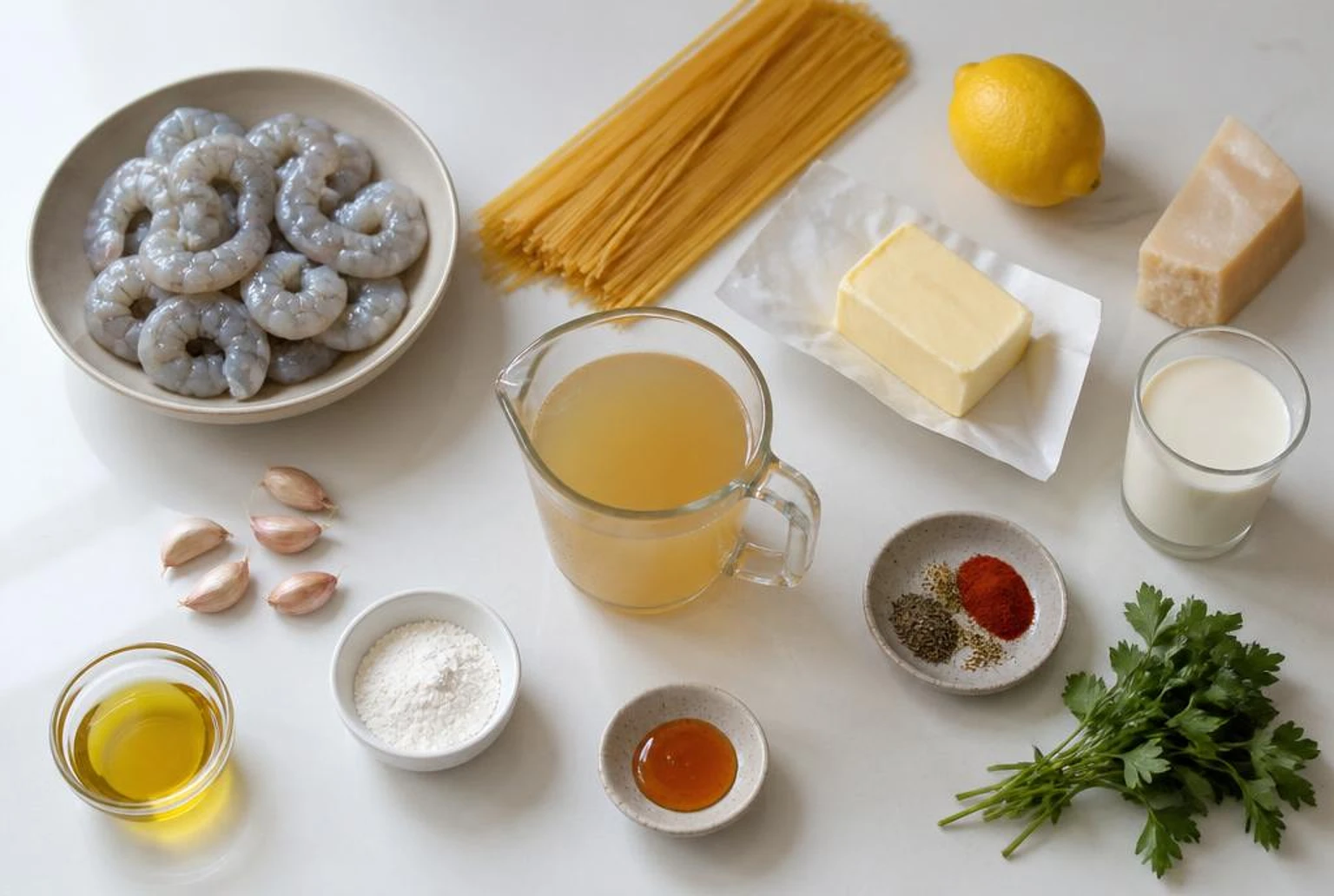
- Shrimp: 1 pound of large, uncooked shrimp, labeled 26/30 per pound. Frozen shrimp are fine. Thaw them completely under cool water and pat them very dry. Remove shells and veins if needed. Tails can stay on or come off.
- Shrimp seasoning: salt, pepper, ½ teaspoon of paprika and ¼ teaspoon of garlic powder, with 1 tablespoon of olive oil for the pan.
- Spaghetti: 8 ounces. Fettuccine and linguine also work.
- Dry white wine: ½ cup, such as Sauvignon Blanc, Pinot Grigio or an unoaked Chardonnay. Chicken broth can replace the wine.
- Garlic: 4 to 5 fresh cloves, minced.
- Butter and flour: 3 tablespoons and 2 tablespoons, to thicken.
- Lemon: 2 tablespoons of fresh juice and the zest of 1 lemon. Fresh juice is essential here.
- Parmesan: ⅔ cup, grated from a block. Packaged grated Parmesan does not melt as well.
- Sauce base: 1½ cups of chicken broth, ½ chicken bouillon cube, ½ cup of heavy cream, 1 teaspoon each of mustard powder, Worcestershire sauce and honey, and ½ teaspoon each of dried oregano, dried basil and onion powder. The honey balances the acidity. It does not make the sauce sweet.
- Fresh parsley: for garnish.
How to Make Lemon Shrimp Pasta, Step by Step
1. Mix the sauce base
To start the lemon shrimp pasta, in a large measuring cup with a spout, combine the chicken broth, bouillon, cream, mustard powder, Worcestershire, honey, oregano, basil and onion powder. Set it aside. Measure the rest of the ingredients now, because the cooking goes quickly.
2. Season the shrimp
Make sure the shrimp are fully thawed and pat them very dry. Season lightly with salt, pepper, the paprika and the garlic powder, and toss to coat.
3. Sear the shrimp
Heat the olive oil in a large skillet over medium-high heat. Add the shrimp in a single layer. Cook for about 1 minute 20 seconds on the first side, then 45 to 60 seconds on the second. Move them to a clean plate.
4. Boil the spaghetti
Bring a pot of salted water to a boil and cook the spaghetti according to the package directions. Reserve ½ cup of the pasta water, then drain.
5. Reduce the wine
While the pasta cooks, return the shrimp skillet to medium heat. Pour in the wine and let it reduce by half, about 3 to 4 minutes.
6. Build the base
Add the butter and let it melt. Add the garlic and cook for 1 minute. Stir in the flour and cook for 1 to 2 minutes, until the raw flour smell fades.
7. Add the sauce
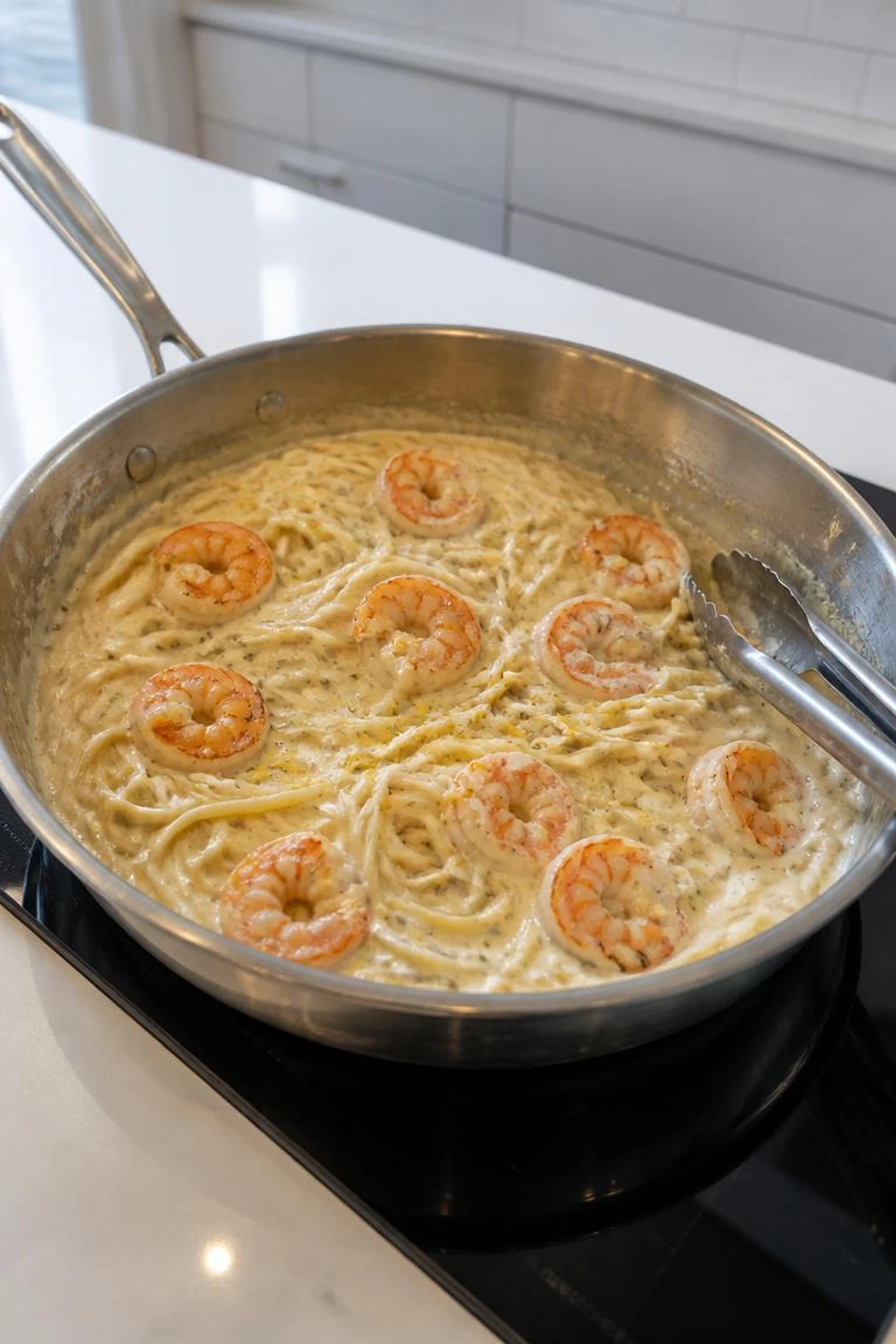
Pour in the sauce base in small splashes, stirring constantly. Bring it to a gentle bubble and let it thicken, uncovered, while the pasta finishes.
8. Finish with lemon and Parmesan
Turn the heat to low and let the sauce cool slightly for 1 minute. Stir in the lemon juice and zest, then add the Parmesan gradually, stirring until it is combined.
9. Toss with the pasta
Add the drained spaghetti and toss until coated. Add small splashes of the reserved pasta water if the sauce needs loosening.
10. Add the shrimp and serve
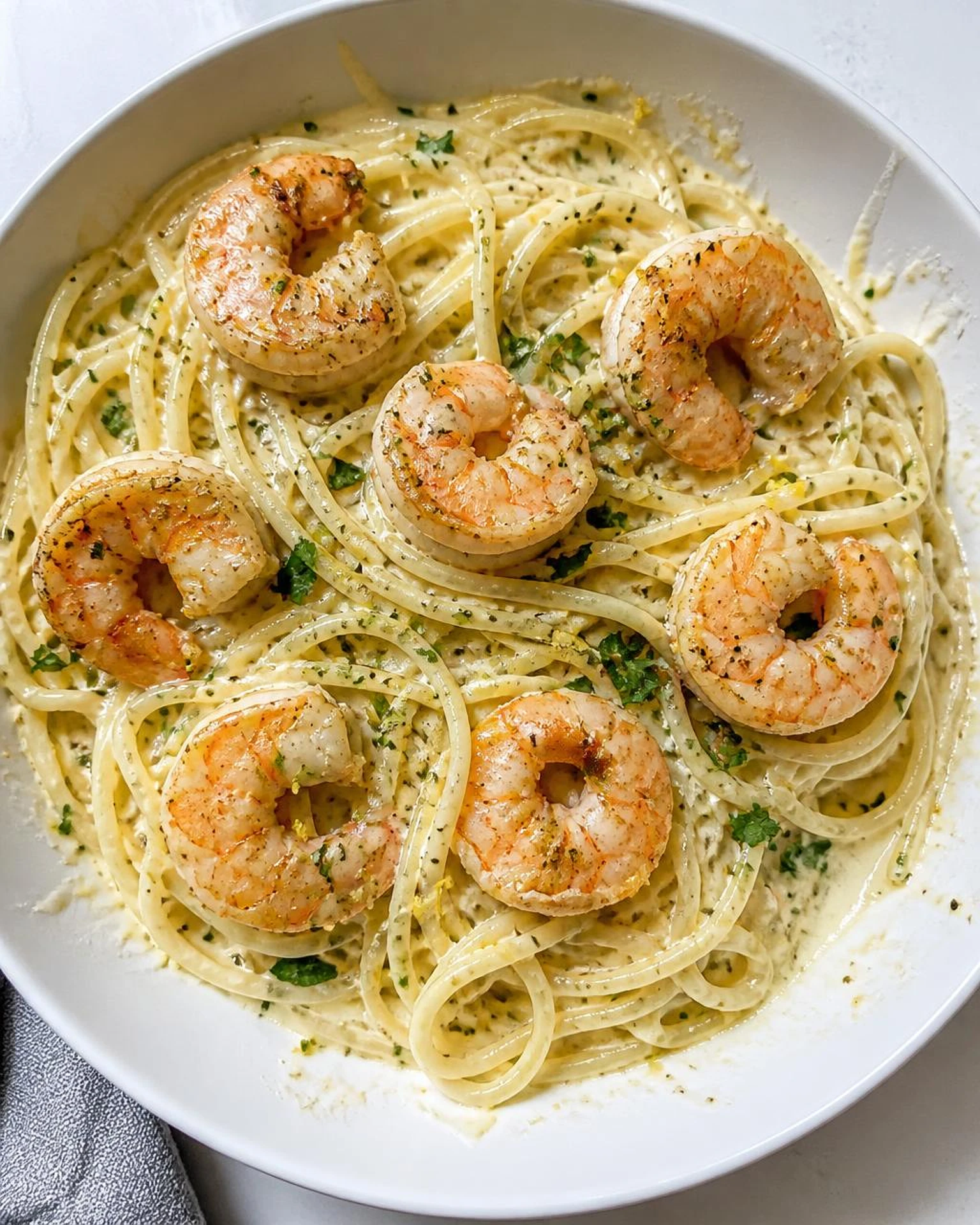
Return the shrimp to the lemon shrimp pasta and toss just until they are heated through. Garnish with parsley and serve.
How to Sear Shrimp Without Overcooking Them
| Stage | Time | What to look for |
|---|---|---|
| First side | About 1 minute 20 seconds | The underside turns pink and lightly browned |
| Second side | 45 to 60 seconds | The flesh turns opaque |
| Back in the sauce | Just until hot | Do not simmer them |
In any shrimp pasta, shrimp go from tender to rubbery in under a minute. That is why they leave the pan after the sear and only come back at the very end. Dry shrimp and a hot skillet matter too. Wet shrimp steam and turn pale before they can brown.
Why the Lemon Goes in Last
In lemon shrimp pasta, timing the lemon matters. Lemon juice loses its fresh, bright flavor when it is boiled, and acid added to a very hot cream sauce can make it look curdled. So the heat is turned down and the sauce rests for a minute before the lemon goes in. The zest matters as much as the juice. The yellow outer layer of the peel holds the aromatic oils, and it gives the sauce a clear lemon fragrance without adding more sourness. Zest the lemon before you cut and juice it. It is much easier that way.
Use only the yellow part of the peel. The white layer underneath is bitter. A fine rasp grater, used with light pressure and a few passes over each area, takes off just the right amount.
What the Wine Does
The wine is the first liquid in the pan after the shrimp come out. As it bubbles, it dissolves the browned, paprika-tinted bits left from searing and carries them into the sauce. Reducing it by half cooks off the harsh alcohol edge and concentrates its acidity and fruit. Choose a dry white you would be happy to drink. Sweet wines throw off the balance of the sauce.
Understanding the Sauce Base
| Ingredient | What it adds |
|---|---|
| Chicken broth and bouillon | Savory depth and most of the liquid |
| Heavy cream | Richness and a creamy texture |
| Mustard powder | A gentle sharpness that supports the lemon |
| Worcestershire sauce | Savory complexity |
| Honey | Balance for the acid |
| Oregano, basil, onion powder | Background herb and onion flavor |
Mixing these in one measuring cup before you start is what makes the recipe calm to cook. When the flour and butter are ready, you only have to pour and stir.
Prepping Shrimp
- Thaw fully. Hold frozen shrimp under cool running water in a colander until they are flexible all the way through.
- Peel and devein if needed. Many bags are sold already peeled and deveined, which saves time.
- Dry thoroughly. Press the shrimp between layers of paper towel. This is the most important step for a good sear.
- Season lightly. The sauce is well seasoned, so the shrimp only need a light coating.
Timing the Pasta and the Sauce
In this shrimp pasta, the pasta and the sauce finish together if you start the pasta water early. Put the pot on before you season the shrimp. Sear the shrimp while the water comes to a boil, drop the spaghetti, and build the sauce while it cooks. If the sauce is ready first, keep it on low and wait to add the lemon and Parmesan until the pasta is nearly done. If the pasta is ready first, drain it, keeping the reserved water, and toss it with a spoonful of that water so it does not stick.
Why Flour in a Cream Sauce?
Two tablespoons of flour, cooked in the butter with the garlic, form a quick roux. It thickens the broth and cream so the sauce coats the spaghetti instead of running to the bottom of the bowl, and it helps the sauce stay smooth when the lemon juice goes in. Cook the flour for the full 1 to 2 minutes, until it no longer smells raw. Then add the liquid slowly. The first splashes will seize into a thick paste. Keep stirring and adding, and it relaxes into a smooth sauce.
Choosing Parmesan
Buy a wedge and grate it yourself, on the fine side of a box grater or with a rasp grater. Freshly grated Parmesan melts into the sauce almost immediately. Packaged grated Parmesan does not melt as well and can leave the sauce slightly gritty. Add the cheese gradually, a small handful at a time, and stir until each addition disappears before adding more.
How Thick Should the Sauce Be?
Before the pasta goes in, the sauce should be a little looser than you want on the plate. Spaghetti absorbs liquid quickly, and the Parmesan thickens the sauce further as it melts. Once everything is tossed together, the sauce should cling to the strands and leave a light, creamy coating in the pan. If it tightens up, add the reserved pasta water a splash at a time. The starch in that water loosens the sauce without thinning its flavor.
Serving It
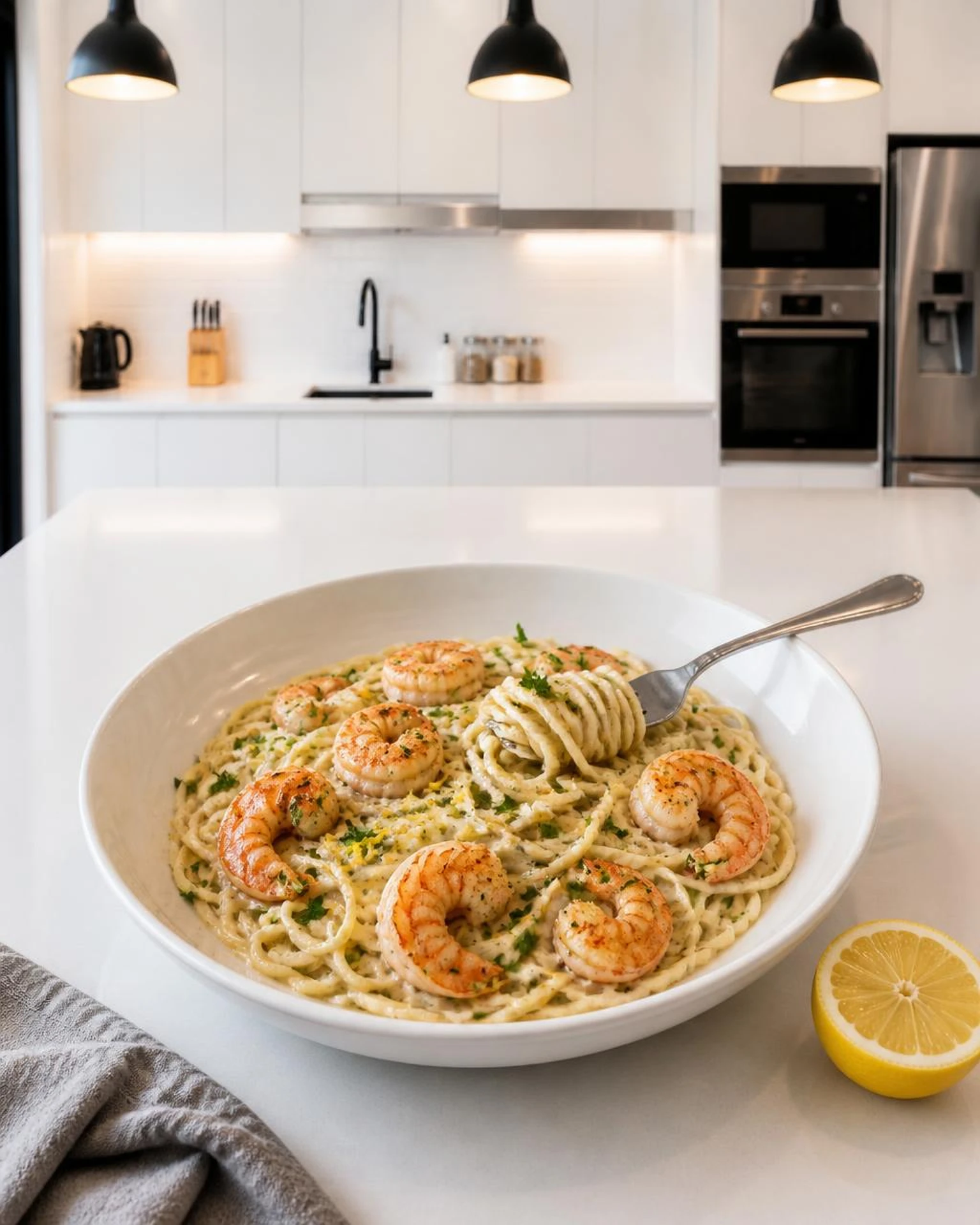
Serve lemon shrimp pasta as soon as the shrimp are warmed through. Use tongs to twirl a portion of spaghetti into each bowl, then set the shrimp on top so everyone gets a fair share. Spoon any sauce left in the skillet over the bowls and finish with chopped parsley. Warm bowls keep the cream sauce loose for longer at the table.
Tails On or Off?
| Tail-on | Tail-off | |
|---|---|---|
| At the table | Has to be removed while eating | Ready to eat with a fork |
| Best for | A dinner-party look | Weeknights and children |
Both are fine in the tested recipe. For a pasta dish that is eaten with a fork, tail-off shrimp are the more practical choice.
Common Mistakes to Avoid
- Wet shrimp. They steam and never brown.
- Crowding the skillet. Cook in a single layer, in two batches if needed.
- Walking away from the shrimp. Two minutes goes fast.
- Forgetting to save pasta water. Scoop it out before you drain.
- Adding lemon to a boiling sauce. Lower the heat and wait a minute.
- Using bottled lemon juice. Fresh juice makes a clear difference here.
How Much Does It Make?
With 8 ounces of spaghetti and a pound of shrimp, this lemon shrimp pasta makes about four dinner portions, with six or seven shrimp in each bowl.
Troubleshooting
| Problem | Likely cause | Fix |
|---|---|---|
| Shrimp are rubbery | Cooked too long, or simmered in the sauce | Sear about 2 minutes in total and add them back only to warm through |
| Shrimp did not brown | Shrimp were wet, or the pan was crowded | Pat very dry and cook in a single layer |
| Sauce is lumpy | Sauce base added too fast to the flour | Pour it in small splashes, stirring constantly |
| Sauce is grainy | Parmesan added to very hot sauce, or pre-grated cheese | Lower the heat, wait 1 minute, and use Parmesan grated from a block |
| Sauce is too thick | Reduced a little too far | Loosen with reserved pasta water |
| Garlic turned blue or green | Older garlic reacting with acid | It is still safe to eat. Use fresh garlic to avoid it |
| Too tart | Lemons vary | Add the juice gradually and taste |
Easy Swaps
| Instead of | Use |
|---|---|
| Spaghetti | Fettuccine or linguine |
| ½ cup white wine | ½ cup chicken broth |
| Fresh shrimp | Frozen shrimp, fully thawed and patted dry |
| Tail-on shrimp | Tail-off shrimp, or the other way around |
Storage and Reheating
- Refrigerate: leftover lemon shrimp pasta in an airtight container for up to 3 days.
- Freeze: for up to 3 months.
- Reheat: gently over low heat, or in the microwave at reduced power.
- Loosen: add a small splash of milk, cream or chicken broth.
- Do not overheat: the shrimp turn tough.
Shrimp are done when the flesh is pearly or white and opaque. See the safe minimum internal temperature chart on FoodSafety.gov for seafood guidance.
What to Serve With Lemon Shrimp Pasta
Lemon shrimp pasta is rich and bright at once, so simple sides are best. Cheesy garlic bread, bread with an olive oil dip, or a green salad all fit.
More creamy pasta dinners: chicken alfredo pasta, cherry tomato pasta, chicken mozzarella pasta and Mediterranean pasta.
If you like lemon and garlic, this chicken piccata uses the same bright flavors in a butter sauce.
For a simpler bowl without seafood, try this one-pot garlic parmesan pasta.
Lemon Shrimp Pasta FAQ
How long do you cook shrimp for lemon shrimp pasta?
About 2 minutes in total: roughly 1 minute 20 seconds on the first side and 45 to 60 seconds on the second, over medium-high heat.
Can I use frozen shrimp?
Yes. Frozen shrimp work well in lemon shrimp pasta. Thaw them completely under cool water and pat them very dry before seasoning.
What size shrimp should I buy?
For lemon shrimp pasta, buy large shrimp, labeled 26/30 per pound.
Should I leave the tails on?
Either way works. Tail-off shrimp are easier to eat in pasta.
Can I make it without wine?
Yes. In this lemon shrimp pasta, chicken broth can replace the white wine.
What pasta works besides spaghetti?
Fettuccine and linguine both work in lemon shrimp pasta.
Is the sauce creamy?
Yes. This is a creamy lemon shrimp pasta. It has a creamy white wine sauce made with chicken broth, heavy cream and Parmesan, thickened with a little flour.
Why did my garlic turn blue?
Older garlic can turn blue or green when it meets acidic ingredients such as lemon juice or wine. It is still safe to eat.
Why is there honey in the sauce?
One teaspoon balances the acidity of the lemon and wine. It does not sweeten the sauce.
How do I reheat shrimp pasta?
Reheat shrimp pasta gently, over low heat or in the microwave at reduced power, with a splash of milk, cream or broth. Overheating toughens the shrimp.
Lemon Shrimp Pasta
Ingredients
Method
- Combine the sauce base ingredients in a large measuring cup with a spout. Set aside.
- Pat the thawed shrimp very dry. Season lightly with salt, pepper, paprika and garlic powder and toss.
- Heat the olive oil in a large skillet over medium-high heat. Cook the shrimp about 1 minute 20 seconds on the first side and 45 to 60 seconds on the second. Transfer to a clean plate.
- Cook the spaghetti in salted boiling water according to the package directions. Reserve ½ cup of pasta water and drain.
- In the same skillet over medium heat, reduce the wine by half, 3 to 4 minutes.
- Melt the butter, add the garlic and cook 1 minute. Stir in the flour and cook 1 to 2 minutes.
- Gradually add the sauce base in small splashes, stirring constantly. Bring to a gentle bubble and let it thicken uncovered.
- Reduce the heat to low and let the sauce cool for 1 minute. Stir in the lemon juice and zest, then the Parmesan, gradually.
- Add the drained pasta and toss. Add small splashes of pasta water as needed.
- Return the shrimp to the pan and toss to heat through. Garnish with parsley and serve.
1 thought on “Lemon Shrimp Pasta”