
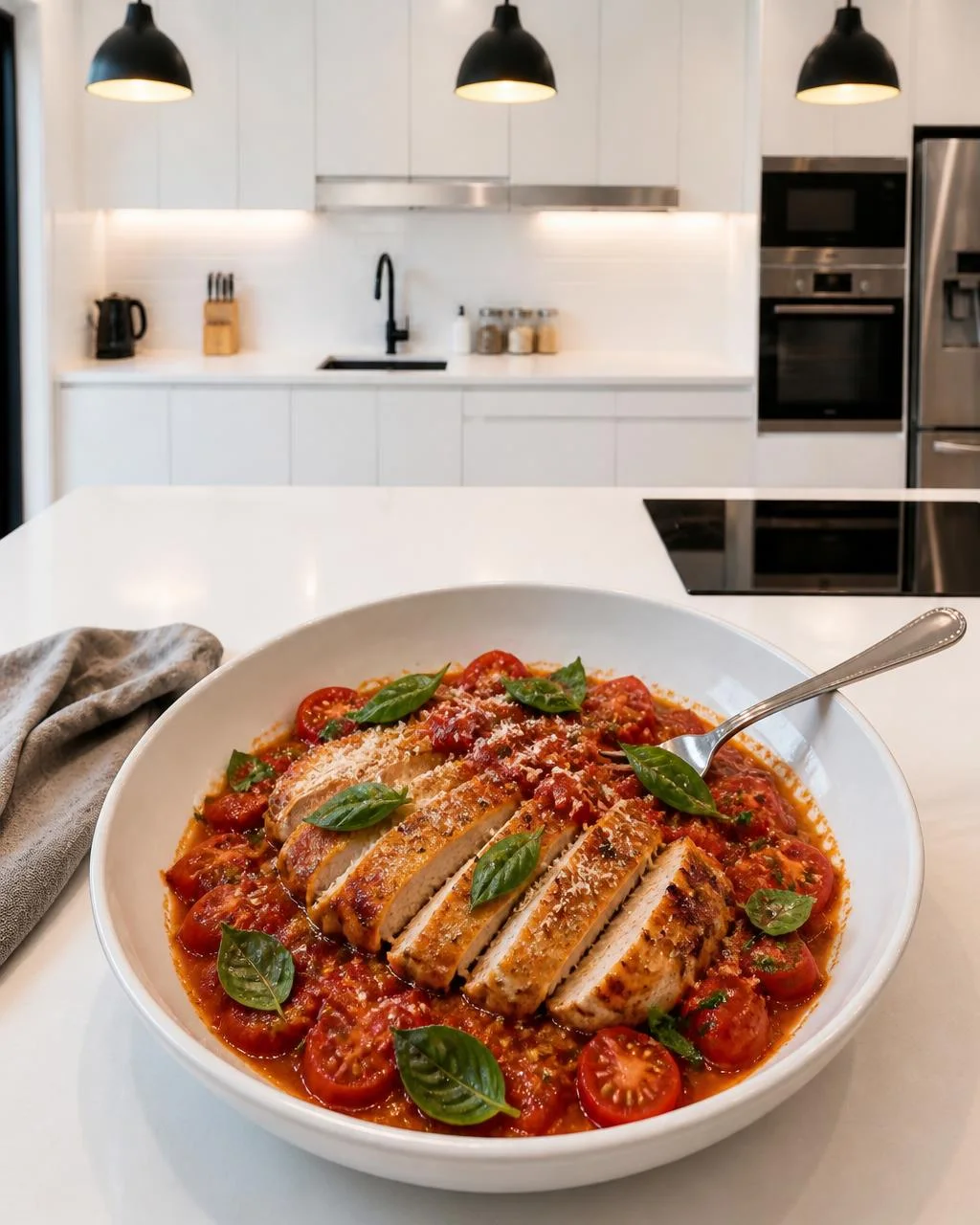
Chicken pomodoro is thin, golden chicken cutlets simmered in a bright tomato sauce with garlic, white wine, Parmesan and fresh basil. The chicken gets a light flour and breadcrumb coating and a quick sear, the sauce is built in the same skillet from whole canned tomatoes, and the two come back together at the end under a layer of melted cheese.
It is the kind of dinner that tastes like a restaurant plate but uses one pan and pantry ingredients. Plan on about an hour, most of it the sauce simmering on its own, and four servings.
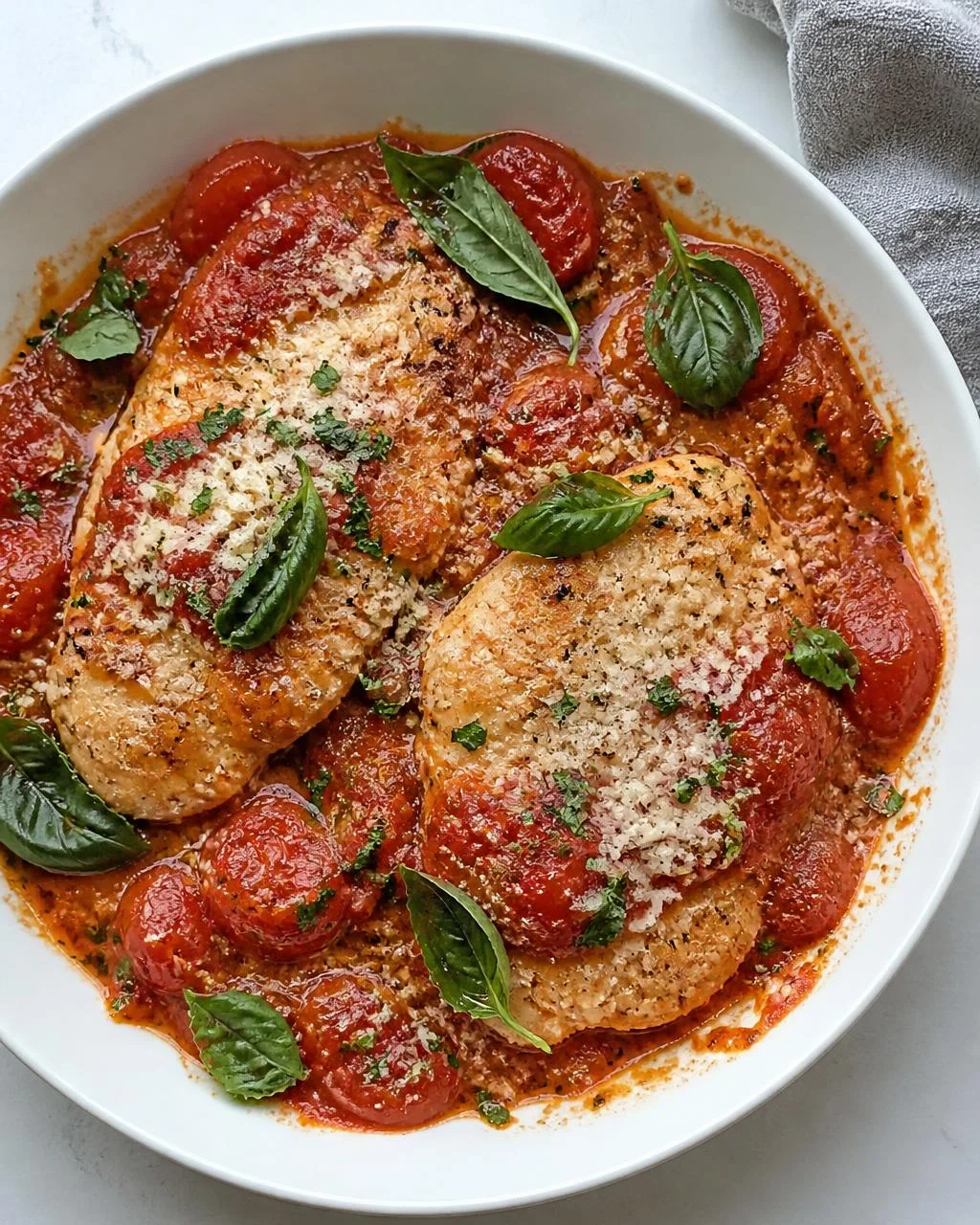
Table of Contents
Chicken Pomodoro at a Glance
| Serves | 4 |
| Total time | About 1 hour |
| Pan | One large skillet |
| Chicken | Breasts split and pounded to 1/2 inch, lightly dredged, seared 4 to 5 minutes per side |
| Sauce | Whole peeled tomatoes, white wine, garlic, tomato paste, cherry tomatoes, Parmesan, cold butter |
| Finish | Fresh basil and parsley |
| Serve with | Angel hair pasta and garlic bread |
| Keeps | 3 days in the fridge, 3 months in the freezer |
What Is Chicken Pomodoro?
Pomodoro is the Italian word for tomato, and a pomodoro sauce is a simple one: tomatoes, garlic, olive oil and basil, cooked until the flavor concentrates. Chicken pomodoro puts pan-seared chicken into that sauce. This version adds a few things that make a quick sauce taste slow-cooked: a splash of white wine, a spoonful of tomato paste, a little honey to balance the acidity and a knob of cold butter stirred in at the end.
Chicken Pomodoro vs. Chicken Parmesan
They are cousins. Chicken parmesan is fully breaded in flour, egg and breadcrumbs, fried until crunchy and baked under marinara and a thick layer of mozzarella. Chicken pomodoro is lighter and faster. The chicken gets one thin dredge with no egg, the sauce is fresher and chunkier, and the cheese is a modest amount of Parmesan. If you want crunch and a cheese pull, make chicken parmesan. If you want sauce to spoon over pasta and a pan that cleans up quickly, make this.
Why This Recipe Works
- A light dredge, not a breading. Flour and plain breadcrumbs give the chicken a thin golden crust that holds sauce without turning heavy.
- The fond flavors the sauce. The browned bits left by the chicken dissolve into the wine and become the base of the pomodoro.
- Whole tomatoes, crushed in the pan. You control the texture with a potato masher, from chunky to nearly smooth.
- Twenty minutes of simmering. Uncovered, the sauce reduces and the tomato flavor concentrates.
- Two kinds of tomato. Halved cherry tomatoes go in for the last 5 minutes and keep some fresh bite.
- Cold butter at the end. It gives the sauce a smooth, glossy finish and softens the acidity.
Ingredient Notes
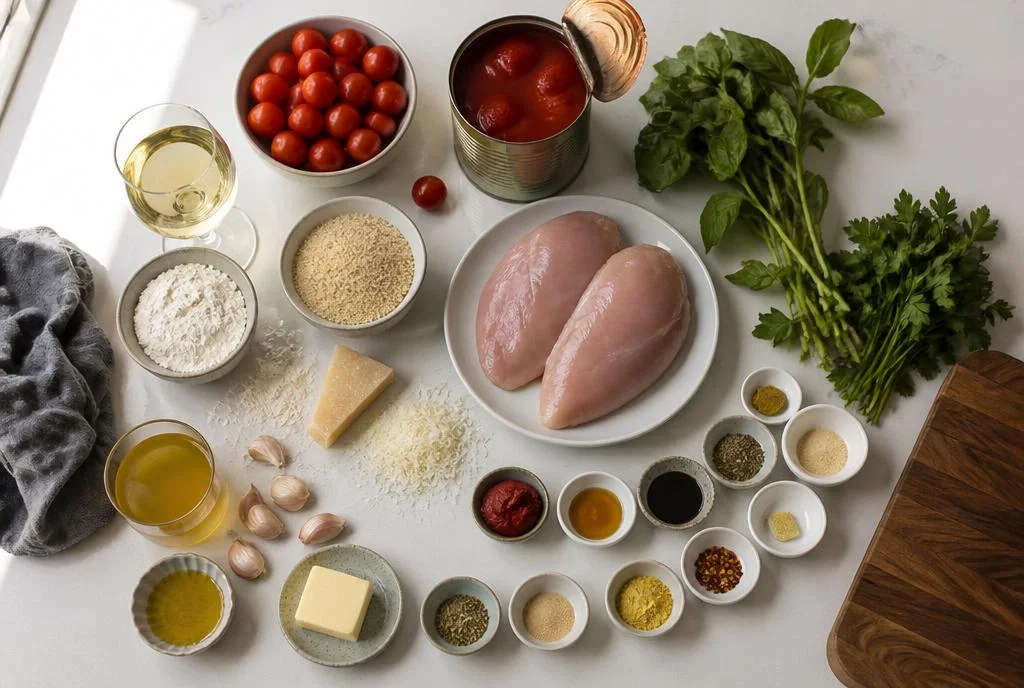
Amounts are in the recipe card. A few things to know before you shop:
- Chicken breasts: two large ones, each sliced in half through the middle, for four cutlets.
- Flour and plain breadcrumbs: equal parts. Use plain crumbs, since the chicken is already seasoned.
- Whole peeled tomatoes: one 28 ounce can with its juice. San Marzano style tomatoes are sweeter and less acidic.
- Cherry tomatoes: one cup, halved.
- Dry white wine: Sauvignon Blanc first, then Chardonnay or Pinot Grigio. Chicken broth is the substitute.
- Tomato paste: a tube is handy when you only need two tablespoons.
- Chicken broth and a bouillon cube: savory depth behind the tomatoes.
- Honey, Worcestershire, mustard powder and red pepper flakes: small amounts that balance and round out the sauce. It is not sweet and not spicy.
- Parmesan: grate it fresh from a wedge. Bagged shredded cheese contains cellulose and does not melt as well.
- Cold butter: keep it in the fridge until the moment it goes in.
- Fresh basil and parsley: the basil is not just a garnish here. It is a big part of the flavor.
How to Make Chicken Pomodoro, Step by Step
1. Prepare and dredge the chicken
Slice each chicken breast in half lengthwise. Cover with plastic wrap and pound each piece to an even 1/2 inch. Pat completely dry, rub with a little oil and season both sides with salt, pepper, Italian seasoning and garlic powder. Mix the flour and breadcrumbs on a plate and press the chicken into it on both sides, working it into every fold. Set the chicken aside while you measure everything else. A few minutes of resting helps the coating stick.
2. Sear the chicken
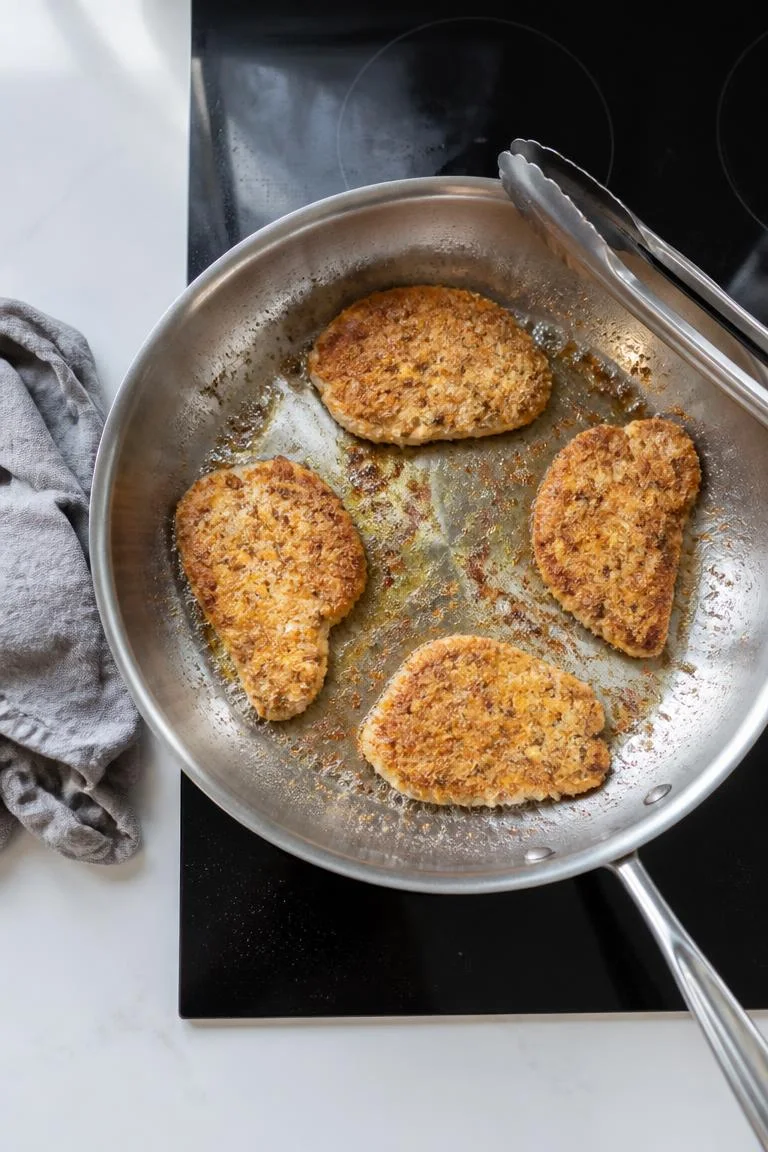
Heat the olive oil in a large skillet over medium-high heat. Sear the chicken for 4 to 5 minutes per side, until a golden crust forms, adding a little more oil if the pan looks dry. Move the chicken to a plate.
3. Deglaze and start the sauce
Turn off the heat and pour in the wine, then set the heat to medium. Scrape the bottom and sides of the pan with a silicone spatula and let the wine reduce for 2 minutes. Stir in the tomato paste and cook for 2 minutes. Add the garlic and cook for 1 minute, stirring the whole time so it does not burn.
4. Crush the tomatoes and simmer
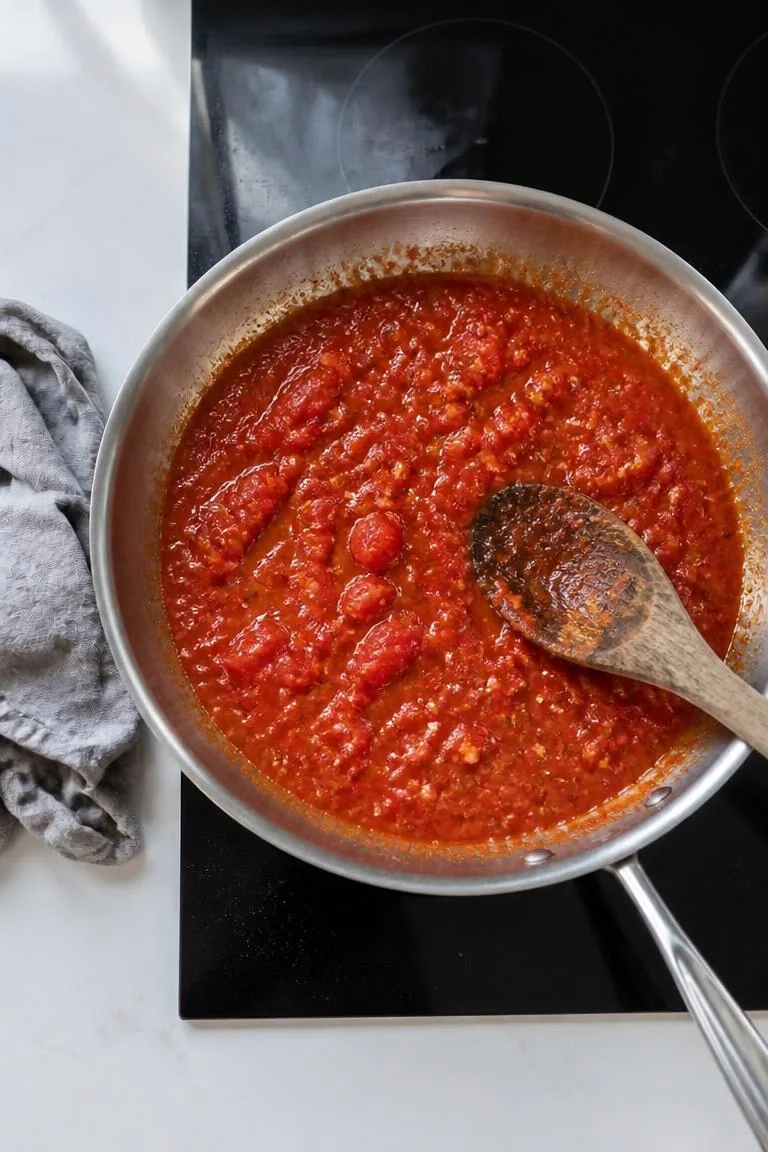
Add the whole tomatoes with their juice and crush them with a potato masher to the texture you like. Stir in the chicken broth, bouillon cube, honey, Worcestershire, oregano, onion powder, mustard powder and red pepper flakes. Bring to a boil, lower to a simmer and cook uncovered for 20 minutes, stirring now and then, until the sauce is thick and concentrated.
5. Add the cherry tomatoes
Stir in the halved cherry tomatoes and simmer for 5 minutes more, just until they soften slightly.
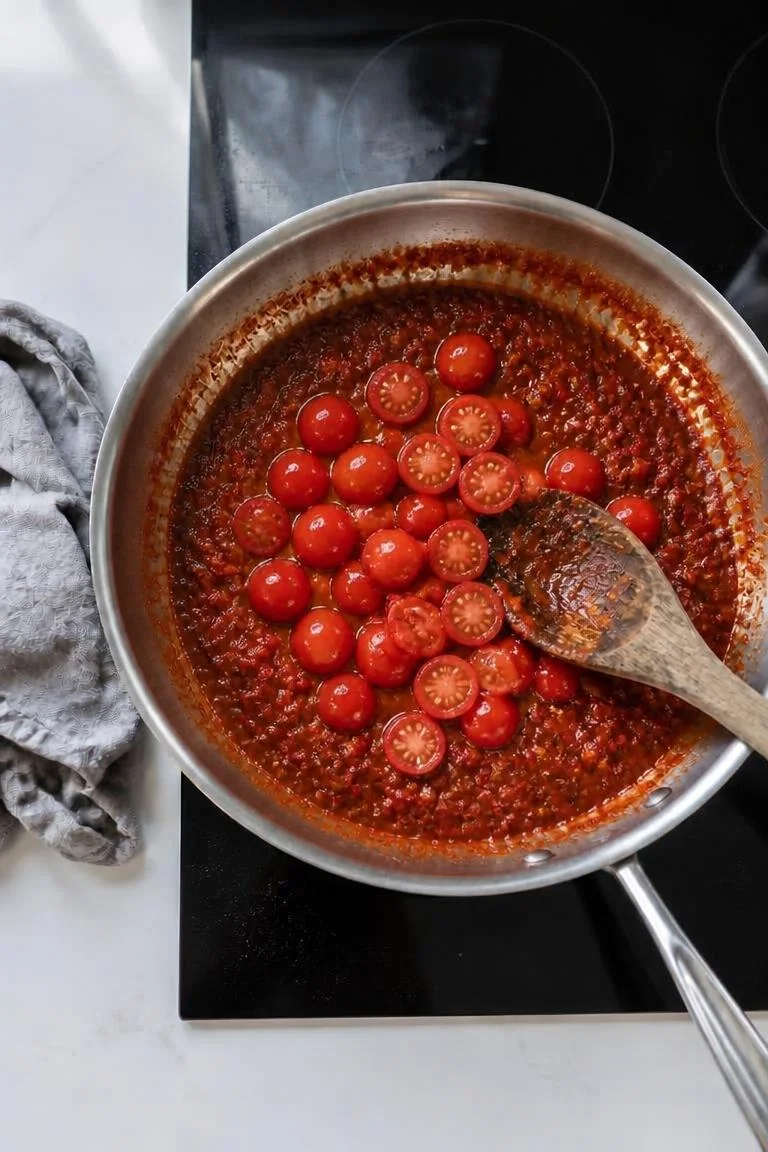
6. Finish with Parmesan and cold butter
Turn the heat to low. Stir in half of the Parmesan and the cold butter until both melt into the sauce. Taste, and add salt and pepper if it needs it.
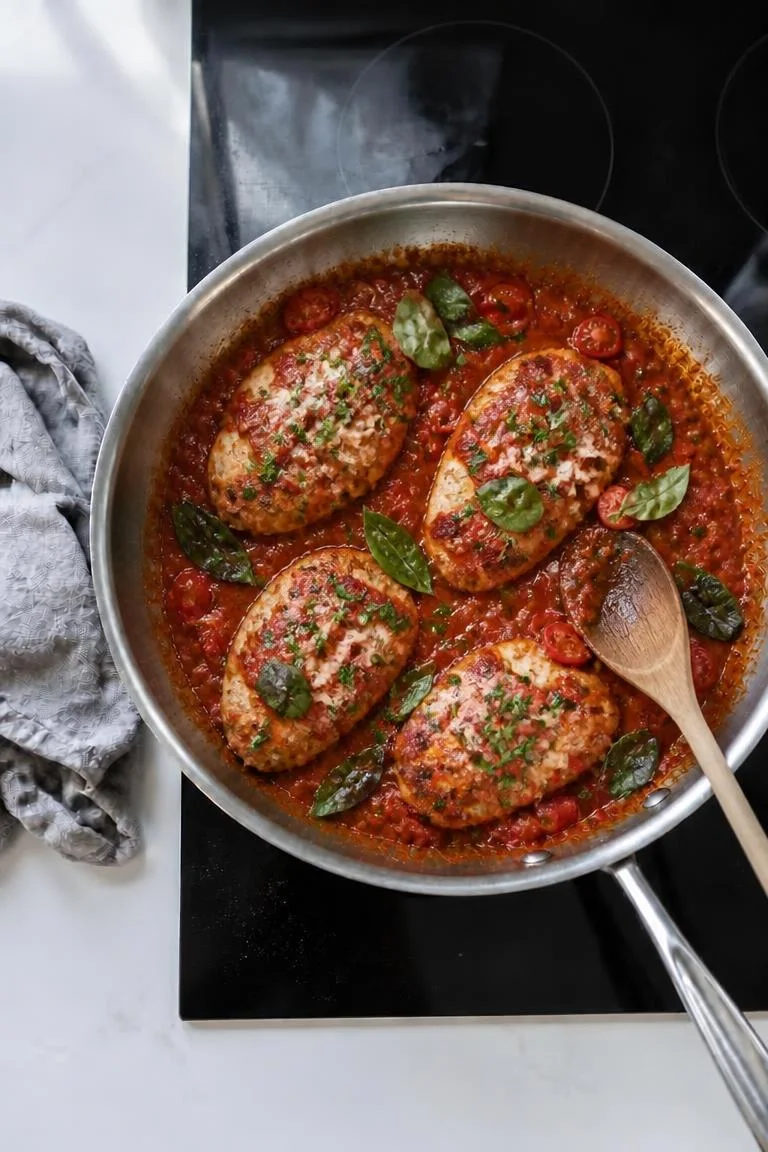
7. Return the chicken and serve
Nestle the chicken back into the skillet and spoon some sauce over each piece. Sprinkle with the rest of the Parmesan, cover and heat for 2 to 3 minutes. If your skillet is oven-safe, you can slide it under a 450°F broiler for a moment to melt the top further. Watch it closely. Scatter with fresh basil and parsley and serve.
Canned or Fresh Tomatoes?
Canned whole peeled tomatoes are the best choice for most of the year. They are picked ripe, they break down evenly and you decide how chunky the sauce is. Fresh Roma or plum tomatoes also work when they are in season. Use about 2 pounds, roughly chopped. Fresh tomatoes hold different amounts of water, so the simmering time will vary. Cook until the sauce is thick, not by the clock.
Avoid canned diced tomatoes if you can. They are treated to hold their shape, so they do not melt into a sauce the way whole tomatoes do.
Why Cold Butter Goes in Last
Stirring cold butter into a hot sauce off the boil is a classic restaurant finish. The butter melts slowly and blends into the sauce, which makes it glossy and smooth and takes the sharp edge off the tomatoes. If the butter is soft, or the sauce is boiling hard, it simply melts into a layer of fat on top. So keep the heat low and the butter cold.
The Basil Matters
Fresh basil is what makes chicken pomodoro taste like chicken pomodoro. Add it at the very end, off the heat, because cooked basil turns dark and loses its perfume within minutes. Tear large leaves by hand. Small ones can go on whole. If you have no fresh basil, add 1/2 teaspoon of dried basil to the sauce with the other dried seasonings. It will still be good, but fresh is worth buying for this dish.
Tips for the Best Chicken Pomodoro
- Pound the chicken evenly. An even 1/2 inch cooks through in the searing time and stays juicy.
- Dry the chicken well. The dredge sticks to dry meat and slides off wet meat.
- Do not move the chicken while it sears. Let the crust form before you turn it.
- Turn the heat off before adding wine. It stops the splatter and keeps the fond from burning.
- Simmer uncovered. You want the water to cook off so the sauce thickens.
- Check the chicken. It is done at 165°F, the safe minimum internal temperature for poultry.
How to Split and Pound Chicken Breasts
Large chicken breasts are too thick to cook evenly in a skillet. Lay one flat, hold it steady with your palm and slice through the middle with the knife parallel to the board, so you end up with two thinner pieces of the same outline. Cover them with plastic wrap and pound from the thick center toward the edges until the whole piece is 1/2 inch. A meat mallet is ideal. A rolling pin or a small heavy saucepan does the same job. Even thickness is the single biggest reason restaurant chicken is juicy.
Which Skillet to Use
Use a large skillet, 12 inches if you have one, so four cutlets can sear without touching. Stainless steel is the best choice for chicken pomodoro, because it builds the browned bits that flavor the sauce and it does not react with tomatoes. Enameled cast iron also works well. Avoid bare cast iron and aluminum for a long tomato simmer, since acid can pick up a metallic taste, and note that nonstick pans produce very little fond.
Common Mistakes to Avoid
- Crowding the pan. If the cutlets touch they steam and the coating turns pale and soft. Sear in two batches in a smaller skillet.
- Using seasoned breadcrumbs. With Italian seasoning, bouillon and Parmesan already in the dish, seasoned crumbs can make it too salty.
- Covering the sauce. A lid traps the steam and the sauce never thickens.
- Leaving the chicken in the sauce the whole time. It would overcook and the crust would dissolve. It goes back for the last 2 to 3 minutes only.
- Adding basil too early. Heat turns it black. Scatter it over the finished dish.
- Skipping the taste test. Canned tomatoes vary. Taste after the butter and adjust the salt.
What to Do With Leftovers
Leftover chicken pomodoro is easy to turn into another meal. Slice the chicken and toss it with the sauce and hot pasta for a quick pomodoro chicken pasta. Tuck a cutlet and a spoonful of sauce into a toasted roll with extra Parmesan for a sandwich. Or chop everything, warm it and spoon it over rice, polenta or a baked potato. The sauce on its own is also worth saving. Extra pomodoro sauce is good on pizza, over eggs or stirred into soup.
Troubleshooting
| Problem | Likely cause | Fix |
|---|---|---|
| Sauce is thin | Not simmered long enough, or covered | Simmer uncovered a few more minutes until it mounds on a spoon |
| Sauce is too acidic | Tomatoes vary from can to can | Stir in the butter, then a little more honey, a pinch at a time |
| Coating fell off the chicken | Chicken was wet, or it was moved too soon | Pat dry, let the dredged chicken rest, and turn it only once |
| Garlic tastes bitter | It browned | Cook it for 1 minute only, stirring constantly |
| Chicken is dry | Uneven thickness or overcooked | Pound to 1/2 inch and reheat in the sauce for only 2 to 3 minutes |
| Parmesan clumped | Sauce was boiling, or the cheese was pre-shredded | Lower the heat and use freshly grated cheese |
| Sauce looks greasy | Butter added over high heat | Take the pan off the heat and stir until it comes together |
Easy Swaps
| Instead of | Use |
|---|---|
| White wine | Chicken broth |
| Canned whole tomatoes | About 2 pounds fresh Roma tomatoes, chopped |
| Fresh basil | 1/2 teaspoon dried basil, added with the seasonings |
| Angel hair | Thin spaghetti or buttered noodles |
| Two large breasts | Four thin-sliced chicken cutlets |
Storage, Freezing and Reheating
- Refrigerate: store the chicken and sauce in an airtight container for up to 3 days. Many people think it tastes even better the next day.
- Freeze: freeze for up to 3 months. Thaw overnight in the refrigerator.
- Reheat on the stove: warm gently in a covered skillet over low heat. Add a splash of chicken broth if the sauce has thickened.
- Reheat in the microwave: heat single portions at slightly reduced power so the chicken does not toughen.
- Hold the basil: add fresh basil after reheating, not before storing.
What to Serve With Chicken Pomodoro
Angel hair pasta is the classic base, because the thin strands pick up the chunky tomato sauce. Thin spaghetti, buttered noodles and fettuccine also work. Add cheesy garlic bread or a crusty loaf to mop up the pan, and a Caesar or simple green salad to finish the plate.
More chicken dinners to try: the crispy easy chicken parmesan recipe, one-pot Mediterranean pasta with lemon chicken, and homemade chicken pot pie. For pasta night, see Italian sausage pasta and spaghetti and meatballs, or browse all my chicken recipes and easy dinner recipes.
Need a dessert to go with it? My easy blackberry cobbler takes 10 minutes to put together.
For a crispy chicken dinner with a sweet and savory sauce, try my sesame chicken.
Chicken Pomodoro FAQ
What does pomodoro mean?
Pomodoro is Italian for tomato. A pomodoro sauce is a simple tomato sauce with garlic, olive oil and basil.
What is the difference between chicken pomodoro and chicken parmesan?
Chicken pomodoro has a thin flour and breadcrumb dredge and a fresh, chunky tomato sauce with a little Parmesan. Chicken parmesan is fully breaded with egg, fried and baked under marinara and mozzarella.
Can I make chicken pomodoro without wine?
Yes. Replace the wine with the same amount of chicken broth.
Can I use fresh tomatoes?
Yes. Use about 2 pounds of Roma or plum tomatoes, roughly chopped, and simmer until the sauce is thick. The time depends on how juicy they are.
Can I use chicken thighs?
The recipe was tested with chicken breasts. Boneless thighs can be dredged and seared the same way. Cook them to 165°F.
What pasta goes with chicken pomodoro?
Angel hair is the usual choice. Thin spaghetti and fettuccine are good too.
Does chicken pomodoro freeze well?
Yes, for up to 3 months. Thaw in the fridge overnight and reheat gently in a covered skillet with a splash of broth.
Can I make the sauce ahead?
Yes. The sauce keeps for up to 3 days in the fridge. Reheat it, then add freshly seared chicken, or reheat the chicken in it.
Is chicken pomodoro spicy?
No. A quarter teaspoon of red pepper flakes adds warmth, not heat. Leave it out for a completely mild sauce.
Is there a way to skip the breadcrumbs?
You can dredge in flour alone for a thinner crust. That change was not part of the tested recipe, so expect a slightly less golden coating.
Chicken Pomodoro
Ingredients
Method
- Slice each chicken breast in half lengthwise. Cover with plastic wrap and pound to an even ½ inch thickness. Pat completely dry. Rub with a little oil and season both sides with salt, pepper, Italian seasoning and garlic powder.
- Combine the flour and breadcrumbs on a plate. Dredge both sides of each piece, pressing the coating in. Set aside while you measure the remaining ingredients.
- Heat the olive oil in a large skillet over medium-high heat. Sear the chicken 4 to 5 minutes per side, until a golden crust forms, adding oil as needed. Remove to a plate.
- Turn off the heat and add the wine. Set the heat to medium, scrape the bottom and sides of the pan and reduce for 2 minutes.
- Stir in the tomato paste and cook 2 minutes. Add the garlic and cook 1 minute, stirring constantly.
- Add the whole tomatoes and their juice and crush with a potato masher. Stir in the broth, bouillon, honey, Worcestershire, oregano, onion powder, mustard powder and red pepper flakes. Bring to a boil, then reduce to a simmer.
- Simmer uncovered for 20 minutes, stirring occasionally, until thick and concentrated.
- Add the cherry tomatoes and simmer 5 minutes more, until slightly softened.
- Reduce the heat to low. Stir in half of the Parmesan and the cold butter. Taste and adjust with salt and pepper.
- Return the chicken to the skillet, spoon sauce over it and sprinkle with the remaining Parmesan. Cover and heat for 2 to 3 minutes, until the chicken reaches 165°F. Optional: broil briefly at 450°F in an oven-safe skillet, watching closely.
- Garnish with fresh basil and parsley and serve over angel hair pasta.
2 thoughts on “Chicken Pomodoro”