
This chicken alfredo pasta is fettuccine tossed in a smooth, garlicky cream sauce with Parmesan and Romano, topped with strips of golden pan-seared chicken. It all happens in about 35 minutes with one skillet and one pasta pot, and it feeds six. The quantities and cooking times come from a tested recipe, so there is no guesswork.
The sauce is made from scratch, and it is easier than it sounds. Butter, garlic and a little flour form the base, half-and-half goes in slowly, and the cheese is stirred in over low heat at the end. That order is what keeps homemade chicken alfredo creamy instead of grainy.
Table of Contents
Chicken Alfredo Pasta at a Glance
| Serves | 6 |
| Total time | About 35 minutes |
| Pasta | ¾ lb fettuccine |
| Chicken | 1 large boneless, skinless breast (¾ to 1 lb), pan-seared |
| Sauce | Butter, garlic, flour, half-and-half, Parmesan, Romano |
| Pans | 1 skillet or 3-quart sauté pan, 1 pasta pot |
| Safe chicken temperature | 165°F |
| Keeps | 3 days in the fridge, 3 months in the freezer |
Why This Chicken Alfredo Recipe Works
- Thin chicken cooks fast and evenly. Slicing the breast in half lengthwise gives you thinner pieces that brown in 4 to 5 minutes per side without drying out.
- The sauce is built in the chicken pan. The browned bits left from searing melt into the butter and season the whole sauce.
- A little flour makes the sauce stable. Two tablespoons cooked in butter thicken the half-and-half, so the sauce holds together and coats the noodles.
- Two cheeses, added on low heat. Parmesan brings a nutty flavor and Romano adds a sharper, saltier edge. Low heat keeps both smooth.
- Pasta water is your adjuster. A splash loosens a sauce that has become too thick, without thinning the flavor.
Ingredient Notes
- Chicken breast: one large boneless, skinless breast or two small ones, ¾ to 1 pound in total. Pat it dry before seasoning, because dry chicken browns and wet chicken steams.
- Fettuccine: ¾ pound. The wide, flat ribbons hold a cream sauce well. Salt the cooking water.
- Butter: 6 tablespoons of good salted butter. It is the first flavor in the sauce, so quality shows.
- Garlic: 3 fresh cloves, minced. It only needs a minute in the butter.
- All-purpose flour: 2 tablespoons to thicken the sauce.
- Half-and-half: 3 cups. No half-and-half? Use 1½ cups of milk plus 1½ cups of heavy cream.
- Parmesan and Romano: ¾ cup grated Parmesan and ½ cup grated Romano. Grate both from a wedge. Freshly grated cheese melts far more smoothly. You can use Parmesan for the full amount if that is what you have.
- Olive oil, salt and pepper: oil for searing, seasoning for the chicken and the finished sauce.
- Fresh parsley: chopped, for a fresh finish.
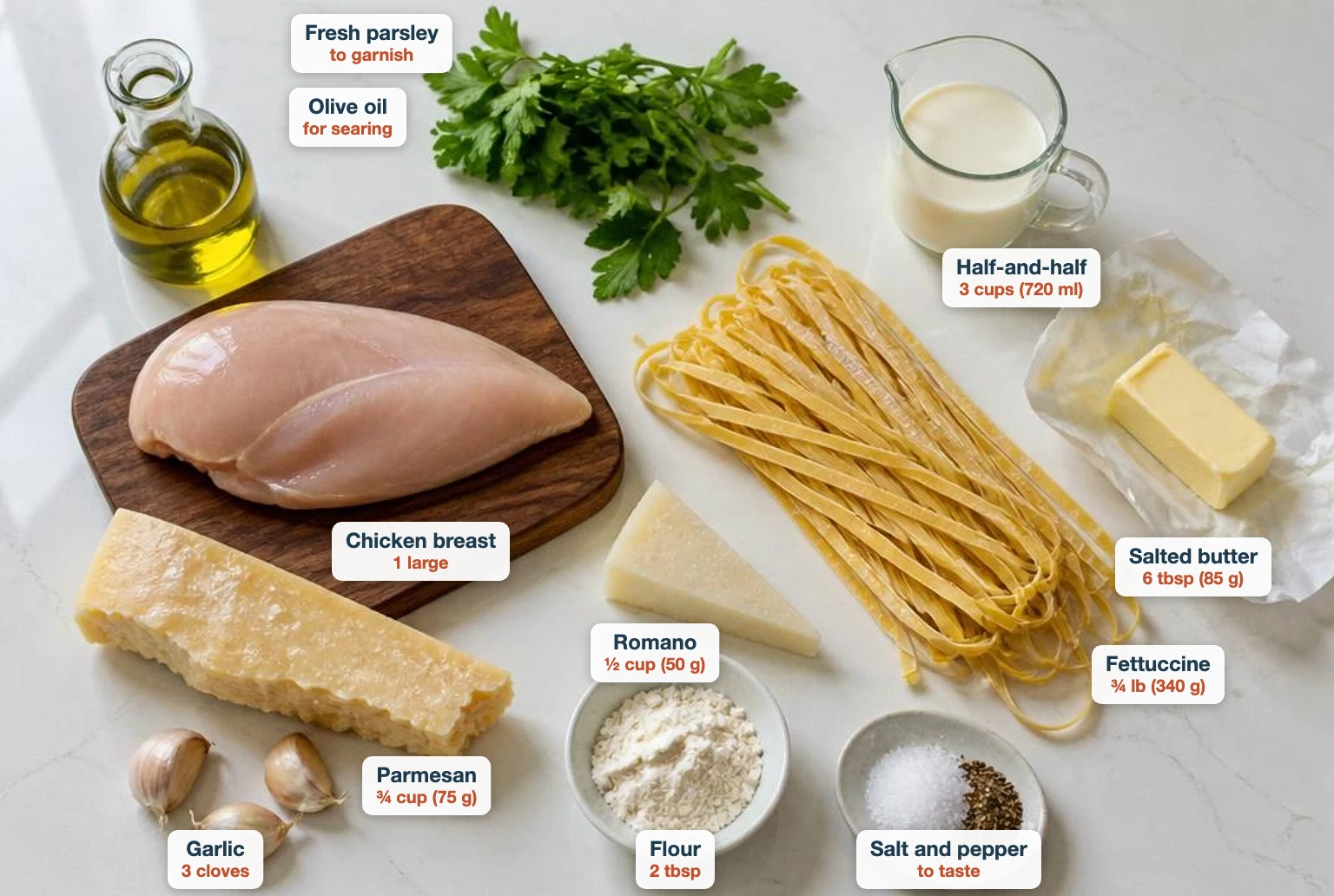
How to Make Chicken Alfredo Pasta, Step by Step
Before you start this chicken alfredo pasta, measure everything before you turn on the stove. The sauce moves quickly once it starts, and you will not want to stop to grate cheese.
1. Start the water and prep the chicken
Put a large pot of salted water on to boil. Cut the chicken breast in half lengthwise to make 2 or 3 thinner slices. Pat the pieces dry with paper towels and season both sides with salt and pepper.
2. Sear the chicken
Heat a thin layer of olive oil in a large skillet or 3-quart sauté pan over medium-high heat. Lay the chicken in the pan and leave it alone for 4 to 5 minutes, until a golden crust forms underneath. Turn and cook the other side for 4 to 5 minutes, until the thickest part reaches 165°F. Move the chicken to a board and let it rest for 10 minutes, then cut it into strips.
3. Boil the fettuccine
Cook the fettuccine according to the package directions. Before you drain it, scoop out about 1 cup of the starchy pasta water and set it aside.
4. Make the sauce base
Use the same skillet, without washing it. Melt the butter over medium heat. Add the garlic and cook for 1 minute, until fragrant. Sprinkle in the flour and whisk for 1 to 2 minutes, stirring the whole time, so the raw flour taste cooks out.
5. Add the half-and-half slowly
Pour in the half-and-half in small splashes, stirring constantly. Each splash should blend in before the next one goes in. This is how you avoid lumps. Bring the sauce to a gentle bubble, then turn the heat down to low and let it simmer while the pasta finishes, stirring now and then. It thickens as it simmers.
6. Stir in the cheese
Keep the heat low. Add the Parmesan and Romano a little at a time, stirring until each addition melts before adding more. Taste, then season with salt and pepper.
7. Toss with the pasta and chicken
Add the drained fettuccine to the sauce and toss until every ribbon is coated. Return the sliced chicken to the pan, toss again and heat for 1 to 2 minutes. Sprinkle with chopped parsley and serve right away.
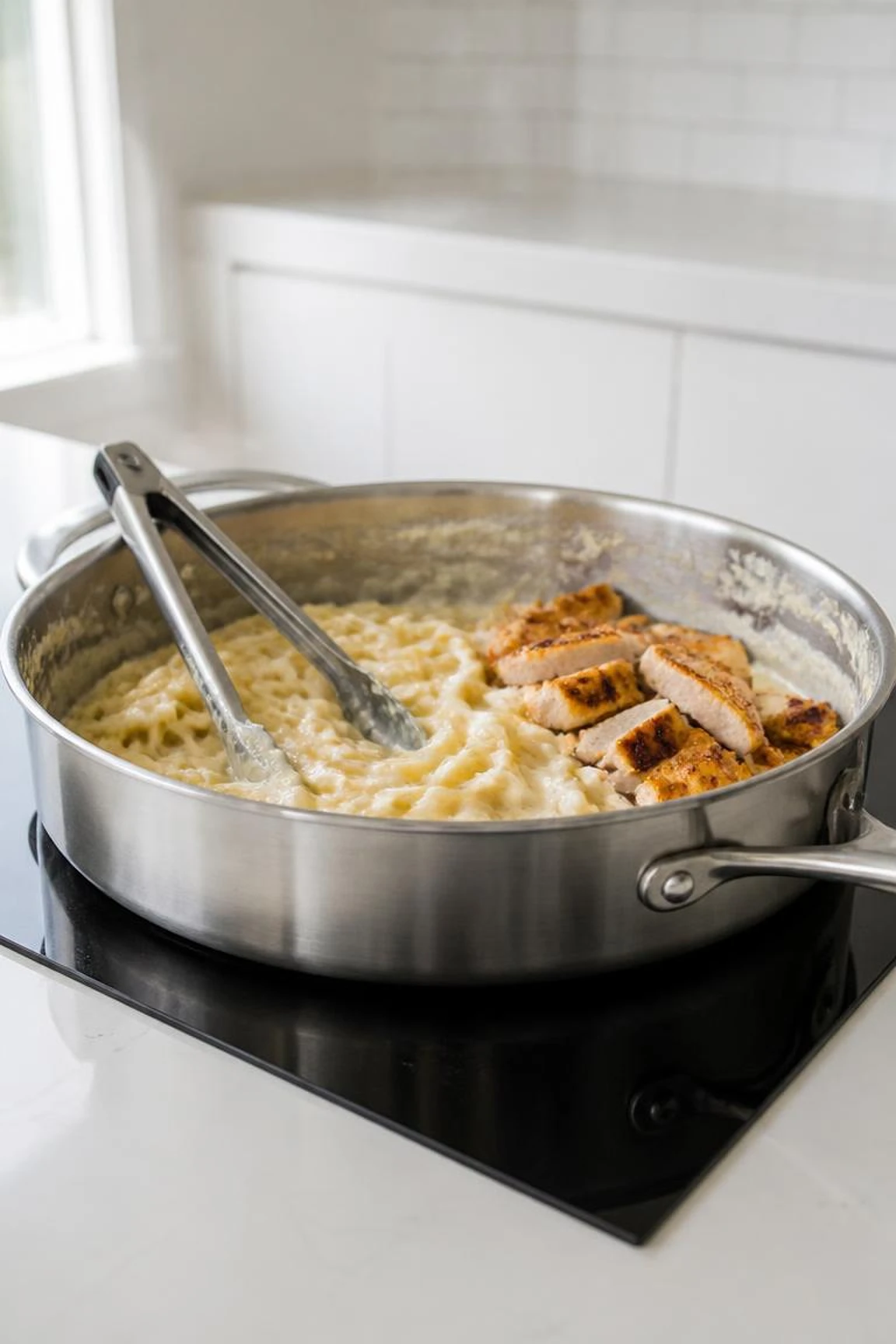
How to Keep Alfredo Sauce Smooth
Grainy or separated sauce is the most common problem with any chicken alfredo recipe, and it nearly always comes down to two things: the cheese and the heat.
- Grate the cheese yourself. Cheese grated from a wedge melts into the sauce. Pre-grated cheese often resists melting and can leave the sauce gritty.
- Turn the heat to low before the cheese goes in. High heat makes cheese tighten and release its fat, which is what a split sauce looks like.
- Add the cheese gradually. A handful at a time, stirring between additions.
- Do not boil the finished sauce. Once the cheese is in, the sauce only needs gentle warmth.
How to Fix Sauce That Is Too Thick or Too Thin
Chicken alfredo sauce changes as it sits. It thickens as it simmers, thickens again when the cheese melts, and keeps thickening on the plate as the pasta absorbs it. So aim for a sauce that looks slightly looser in the pan than you want at the table.
If it is too thick, stir in the reserved pasta water one splash at a time until it flows again. If it is too thin, let it simmer gently for a few more minutes before you add the cheese. Give it a moment after tossing with the pasta too, because the noodles take up sauce quickly.
Getting a Golden Crust on the Chicken
The chicken is the only part of chicken alfredo pasta with real color, so a good sear matters. Three things make it happen. First, the surface has to be dry. Moisture has to boil off before browning can start, and by then thin chicken is already overcooked. Second, the oil should be hot before the chicken goes in. It should shimmer, and the chicken should sizzle on contact. Third, leave it alone. Chicken that is moved around never stays in contact with the pan long enough to brown. When the crust has formed, the piece releases from a stainless pan on its own.
Resting matters just as much. Ten minutes on the board lets the juices settle back into the meat. Cut it straight from the pan and those juices run out onto the board instead. Slice across the grain into strips, which makes each bite more tender.
Timing: How Everything Finishes Together
An easy chicken alfredo depends on overlap. Here is a simple order that keeps everything hot at the same moment.
- Put the pasta water on first. A large pot takes the longest to boil.
- Sear the chicken while the water heats.
- Drop the fettuccine as the chicken comes out to rest.
- Build the sauce in the chicken pan while the pasta boils.
- Slice the chicken once the sauce is simmering.
- Add the cheese, then the drained pasta, then the chicken.
If the pasta is ready before the sauce, drain it and toss it with a spoonful of the pasta water so it does not stick. If the sauce is ready first, hold it on the lowest heat and wait to add the cheese until the pasta is nearly done.
Why Pasta Water Works
The water you boil pasta in picks up starch from the noodles. Stirred into a cream sauce, that starchy water loosens it while helping it stay smooth and cling to the fettuccine. Plain tap water thins a sauce and can make it taste flat. That is why you reserve about a cup before draining. You will rarely need the whole cup, but it is useful at the table and again the next day, when leftovers need loosening.
Parmesan vs. Romano: What Each One Does
| Cheese | Flavor | Role in the sauce |
|---|---|---|
| Parmesan | Nutty, mellow, savory | The main body and flavor of the sauce |
| Romano | Sharper, tangier, saltier | Adds punch, so the sauce does not taste flat |
Because Romano is salty, always taste the sauce after the cheese melts and before you add any salt. If you only have Parmesan, use it for the full 1¼ cups. The sauce will be a little milder, and you may want an extra pinch of salt.
Making It Ahead
Creamy chicken alfredo is at its best the moment it is tossed, but you can still get ahead. Sear and slice the chicken up to a day in advance and refrigerate it. Grate both cheeses and keep them covered in the fridge. Mince the garlic. With those jobs done, the sauce and pasta take about 15 minutes at dinner time. Warm the sliced chicken in the finished sauce for a couple of minutes, until it is hot all the way through.
Common Mistakes to Avoid
- Skipping the pasta water. Once it is down the drain, you have nothing to rescue a thick sauce with.
- Adding cheese over high heat. This is the main cause of grainy sauce.
- Pouring in the half-and-half all at once. Lumps form when cold liquid hits the flour and butter in one go.
- Washing the pan after the chicken. The browned bits are flavor.
- Cutting the chicken right away. Rest it for 10 minutes first.
- Salting before tasting. Salted butter, Romano and pasta water all bring salt.
How Much Does This Recipe Make?
This chicken alfredo pasta recipe makes six servings, with ¾ pound of fettuccine and up to a pound of chicken. For two or three people, the leftovers keep for 3 days. To feed more people, add a salad and bread rather than stretching the sauce, since the sauce quantities are tested for this amount of pasta.
Troubleshooting
| Problem | Likely cause | Fix |
|---|---|---|
| Sauce is grainy | Heat too high when the cheese went in, or pre-grated cheese | Keep the heat low and grate cheese from a wedge |
| Sauce separated or looks oily | Sauce boiled after the cheese was added | Take it off the heat and whisk in a splash of pasta water |
| Sauce is lumpy | Half-and-half added too fast to the flour and butter | Add it in small splashes and stir constantly |
| Sauce is too thick | Simmered long, or sat before serving | Loosen with reserved pasta water, a splash at a time |
| Sauce is too thin | Not simmered enough before the cheese | Simmer gently before adding cheese, and let it stand a minute |
| Chicken is pale | Chicken was wet, or the pan was not hot enough | Pat dry, heat the oil first, and do not move the chicken while it sears |
| Chicken is dry | Pieces too thick, cooked too long | Slice thinner, pull at 165°F, and rest before cutting |
Easy Swaps and Add-Ins
| Instead of | Use |
|---|---|
| 3 cups half-and-half | 1½ cups milk plus 1½ cups heavy cream |
| Parmesan plus Romano | All Parmesan, same total amount |
| Plain sauce | ½ teaspoon each dried basil, oregano and parsley, added with the half-and-half |
| No vegetables | Roasted broccoli, spinach or cherry tomatoes stirred in at the end |
| No mushrooms | Mushrooms sautéed separately, then stirred in at the end |
| Parsley only on top | Panko toasted in melted butter until golden, sprinkled over each bowl |
Storage, Freezing and Reheating
- Refrigerate: leftover chicken alfredo pasta in an airtight container for up to 3 days.
- Freeze: for up to 3 months. Thaw overnight in the refrigerator before reheating.
- Reheat: gently. Cream sauces break under strong heat, so warm leftovers slowly over low heat, or in a heatproof bowl set over a pan of simmering water, stirring often.
- Loosen: the pasta soaks up sauce in the fridge. Stir in a splash of pasta water, milk or chicken broth as it warms.
For chicken, the safe internal temperature is 165°F, both when you first cook it and when you reheat leftovers. See the safe minimum internal temperature chart on FoodSafety.gov.
What to Serve With Chicken Alfredo Pasta
Chicken alfredo pasta is a rich dish, so the best sides are fresh, crisp or acidic. A green salad with a sharp vinaigrette, roasted broccoli, steamed green beans or garlic bread all fit. For a brighter plate, a fruit-forward side such as this mango salad cuts through the cream nicely.
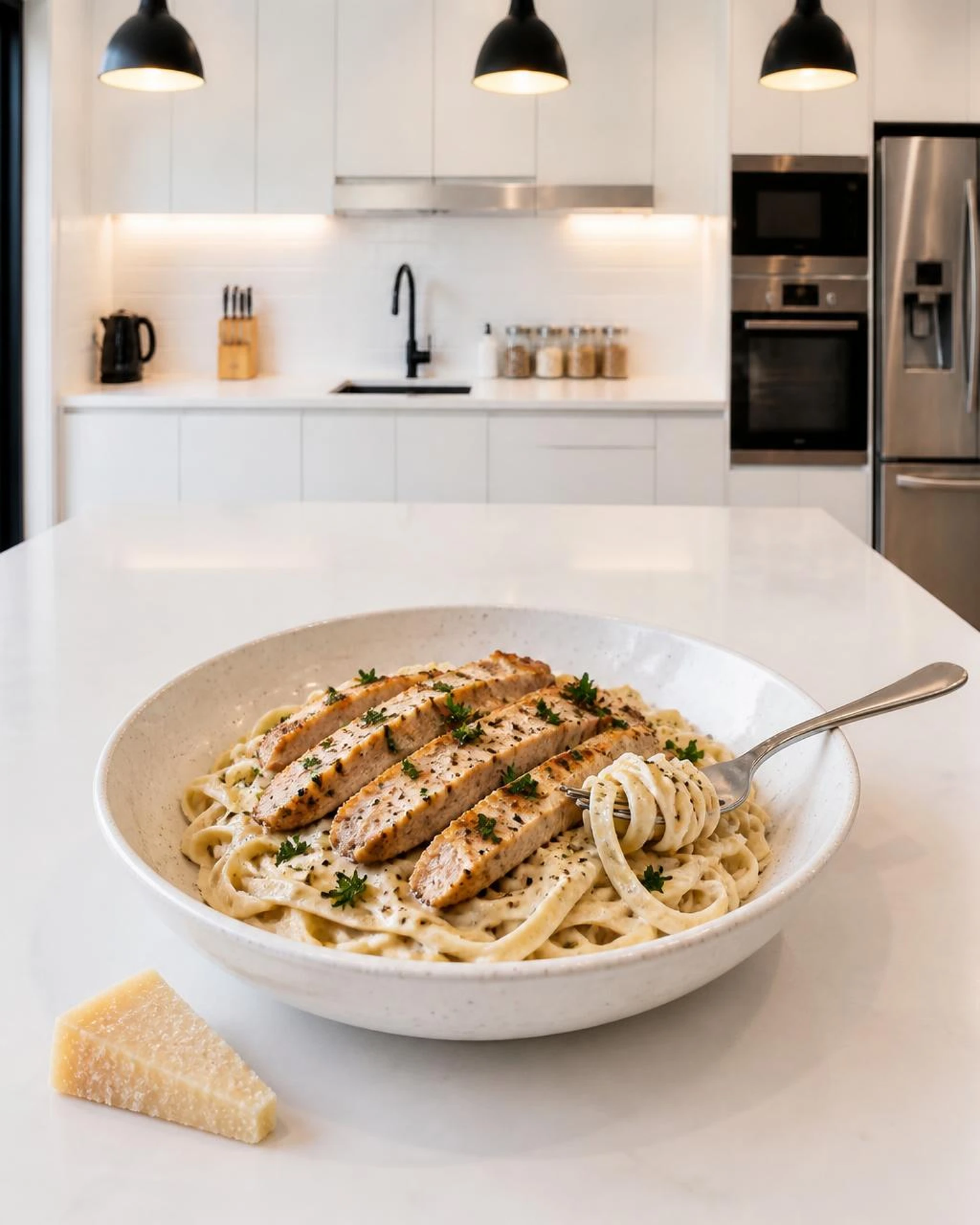
More pasta and chicken dinners to try next: Mediterranean pasta, Italian sausage pasta, chicken pomodoro and easy chicken Parmesan.
Another easy Italian-American dinner: cast iron skillet pizza with a par-baked crust and lots of mozzarella.
Another creamy pasta for busy nights: one-pot cherry tomato pasta, with no draining.
Prefer a tomato-based sauce? This one-pot chicken mozzarella pasta cooks the penne right in the marinara.
For a seafood version of creamy pasta, try this lemon shrimp pasta with seared shrimp and fresh lemon.
To serve with pasta, try this chicken piccata, which makes plenty of lemon caper sauce.
For a quicker, lighter creamy pasta, see this one-pot garlic parmesan pasta.
Chicken Alfredo Pasta FAQ
What is chicken alfredo pasta made of?
Chicken alfredo pasta is fettuccine in a cream sauce made from butter, garlic, half-and-half and grated Parmesan and Romano, topped with sliced pan-seared chicken breast. This version also uses 2 tablespoons of flour to thicken the sauce.
How long does chicken alfredo take to make?
Chicken alfredo takes about 35 minutes. The chicken sears while the water heats, and the sauce simmers while the fettuccine boils.
Why is my alfredo sauce grainy?
Chicken alfredo sauce turns grainy when the heat was too high as the cheese went in, or when the cheese was pre-grated. Lower the heat to low, grate the cheese from a wedge and add it slowly.
Can I use milk instead of half-and-half?
Use a mix: 1½ cups of milk plus 1½ cups of heavy cream replaces the 3 cups of half-and-half. Milk alone gives a thinner, less rich sauce.
Can I use heavy cream for chicken alfredo sauce?
Yes, as part of the liquid. Half milk and half heavy cream is the tested substitute for half-and-half in this chicken alfredo sauce.
What pasta is best for chicken alfredo?
Fettuccine is the classic choice, which is why the dish is often called chicken fettuccine alfredo. The wide, flat noodles carry plenty of sauce.
How do I thicken alfredo sauce?
Simmer the chicken alfredo sauce gently before adding the cheese. It also thickens once the cheese melts and again as it stands with the pasta, so do not over-reduce it.
Can I freeze chicken alfredo pasta?
Yes, chicken alfredo pasta freezes well for up to 3 months. Thaw it overnight in the fridge and reheat slowly, adding a splash of milk, broth or pasta water.
What temperature should the chicken reach?
The chicken in chicken alfredo pasta should reach 165°F in the thickest part. Thin slices get there in about 4 to 5 minutes per side over medium-high heat.
What vegetables go well in chicken alfredo?
Roasted broccoli, spinach, cherry tomatoes and mushrooms all work in chicken alfredo. Cook mushrooms in a separate pan and stir them in at the end.
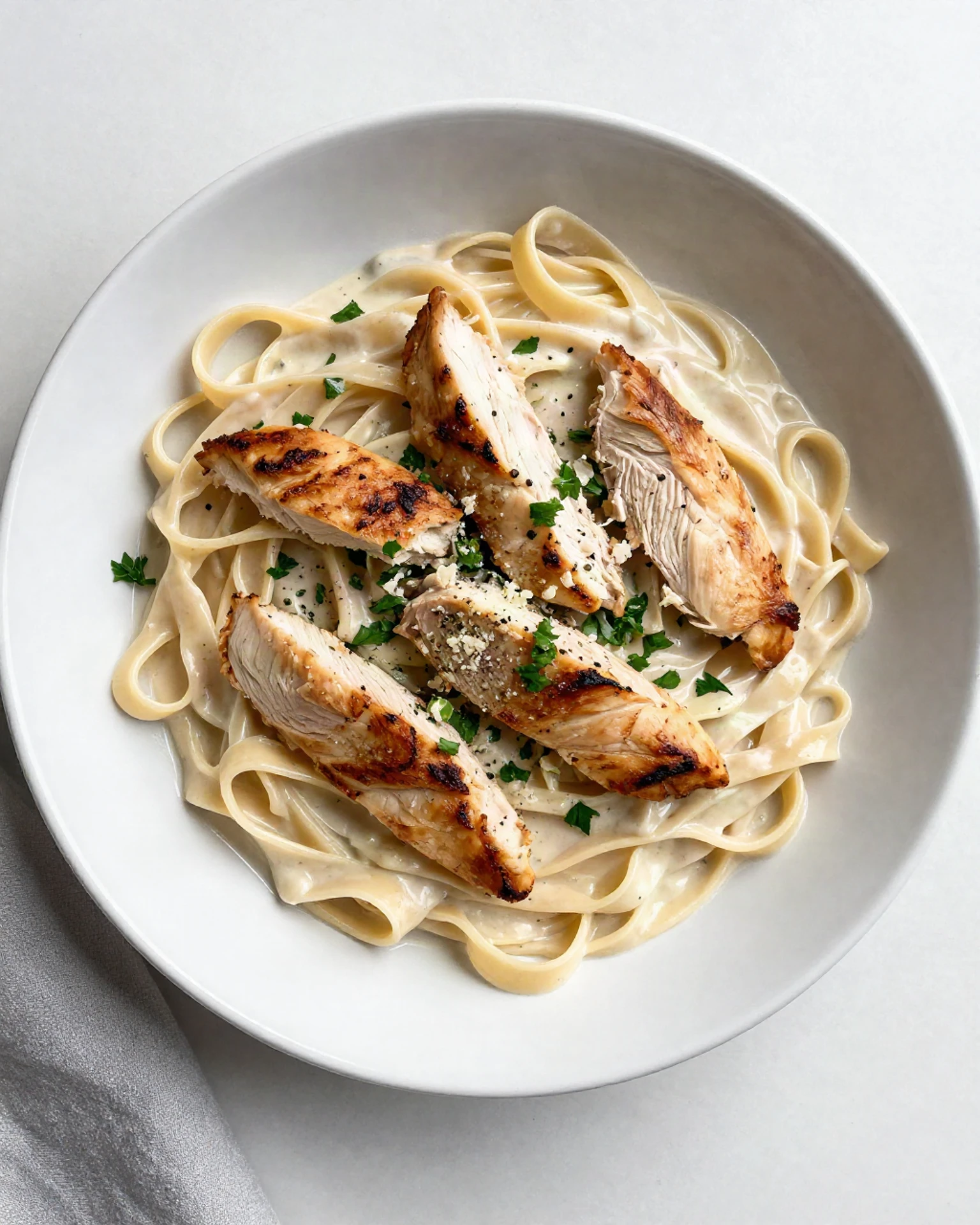
Chicken Alfredo Pasta
Ingredients
Method
- Bring a large pot of salted water to a boil for the pasta.
- Cut the chicken in half lengthwise into 2 or 3 thinner slices. Pat dry and season both sides with salt and pepper.
- Heat olive oil in a large skillet over medium-high heat. Sear the chicken 4 to 5 minutes per side, until golden and 165°F inside. Rest 10 minutes, then cut into strips.
- Boil the fettuccine according to the package directions. Reserve about 1 cup of pasta water, then drain.
- In the same skillet, melt the butter over medium heat. Add the garlic and cook 1 minute.
- Whisk in the flour and cook 1 to 2 minutes, stirring constantly.
- Add the half-and-half in small splashes, stirring constantly. Bring to a gentle bubble, then reduce the heat to low and simmer while the pasta finishes, stirring occasionally.
- With the heat on low, slowly stir in the Parmesan and Romano until melted. Season with salt and pepper to taste.
- Add the drained pasta and toss until coated. Loosen with pasta water, a splash at a time, if the sauce is too thick.
- Return the chicken to the pan, toss and heat 1 to 2 minutes. Garnish with parsley and serve.
Notes
- Main ingredient Chicken
- Ingredients 13
- Steps 10
- Protein 30 g per serving
Nutrition Facts
Amount per serving (recipe makes 6 servings)
- Total Fat 33 g42%
- Saturated Fat 20 g100%
- Cholesterol 128 mg43%
- Sodium 482 mg21%
- Total Carbohydrate 51 g19%
- Dietary Fiber 1.9 g7%
- Sugars 6.7 g
- Protein 30 g60%
* Percent Daily Values are based on a 2,000 calorie diet. Nutrition is calculated per serving from the ingredients listed in this recipe.
Love this recipe? Save it for later!