
This tested pork stew turns an inexpensive cut, pork butt, into tender, juicy bites in a creamy, herb-seasoned gravy with carrots, celery and baby red potatoes. The pork is floured and seared quickly, then simmered very gently for about an hour. It serves six.
The broth for this pork stew is built in layers in one pot: white wine to lift the browned bits, butter and vegetables, a little flour, chicken broth and a splash of cream. Rosemary, thyme, oregano and sage give it a warm, savory flavor that suits pork especially well.
Table of Contents
Pork Stew at a Glance
| Serves | 6 |
| Pot | 1 Dutch oven or heavy pot, about 4.5 quarts |
| Pork | 2½ lb pork butt (Boston butt), in 1-inch cubes |
| Sear | About 45 seconds per side, in batches |
| Simmer | 40 minutes for the pork, then about 20 minutes with the potatoes |
| Vegetables | Onion, 4 carrots, 3 celery ribs, 1 lb baby red potatoes |
| Liquid | 5 cups chicken broth, ¾ cup white wine, ½ cup heavy cream |
| Keeps | 3 days in the fridge, 3 months in the freezer |
Why This Pork Stew Recipe Works
- Pork butt is the right cut. It is well marbled, so it turns tender and stays juicy through a long simmer.
- Seasoned, floured and seared fast. A quick sear builds flavor on the outside while the centers stay raw, ready to cook gently in the broth.
- Wine lifts the fond. Reduced by half, it carries the browned bits into the stew.
- A very gentle simmer. Low heat keeps the pork tender. Boiling makes it tough.
- Potatoes go in late. They cook for about 20 minutes, so they are soft but hold their shape.
Ingredient Notes
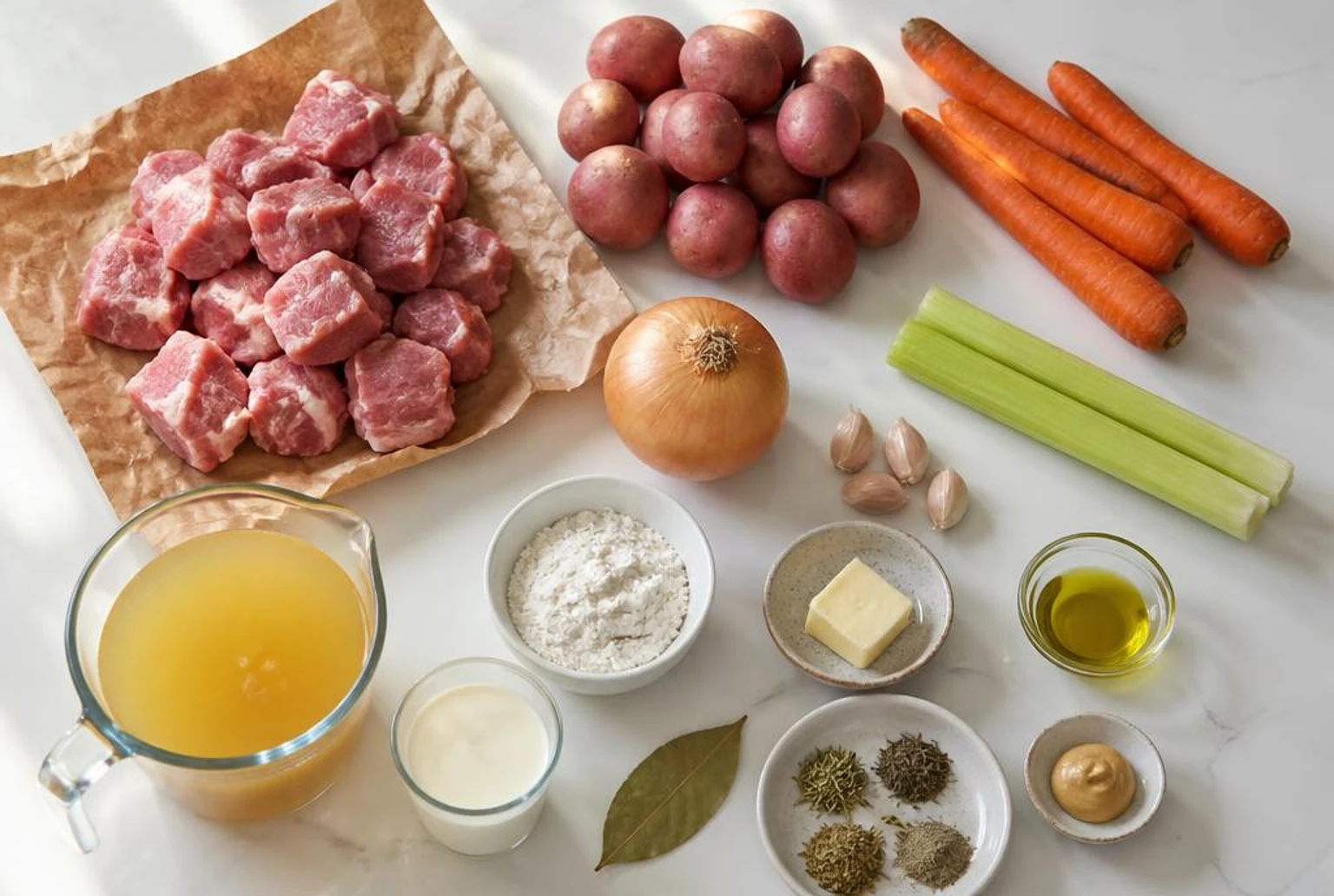
- Pork: 2½ pounds of pork butt, also called Boston butt, cut into 1-inch cubes. Pork shoulder is the next best choice.
- Seasoning mix: 1 teaspoon each of dried rosemary and dried thyme, ¾ teaspoon each of dried oregano and ground sage, and ½ teaspoon each of pepper and celery salt.
- For the pork: 2¼ teaspoons of salt, 3 tablespoons of flour and 2 to 3 tablespoons of olive oil.
- Dry white wine: ¾ cup, such as Pinot Grigio, Chardonnay or Sauvignon Blanc. Chicken broth can replace the wine.
- Vegetables: 1 yellow onion, 4 medium carrots and 3 celery ribs, all diced, plus 4 cloves of garlic, minced.
- Butter and flour: 3 tablespoons of butter and ⅓ cup of flour thicken the broth.
- Flavor boosters: 2 teaspoons of Worcestershire sauce, 1 teaspoon of Dijon mustard and 1 teaspoon of hot sauce. You do not taste them directly.
- Chicken broth: 5 cups. You can use up to 1 cup less or 1 cup more.
- Heavy cream: ½ cup.
- Bouillon and bay: 1 beef bouillon cube and 2 bay leaves. Chicken bouillon can replace the beef.
- Potatoes: 1 pound of baby red potatoes, skins on.
How to Make Pork Stew, Step by Step
1. Mix the seasonings
To start the pork stew, combine the rosemary, thyme, oregano, sage, pepper and celery salt in a small bowl. Measure out the rest of the ingredients before you start cooking.
2. Cut and coat the pork
Cut the pork into 1-inch cubes and discard any large pieces of fat. Sprinkle with the salt and half of the seasoning mix, and rub them into the surface. Sprinkle with the 3 tablespoons of flour and toss to coat.
3. Sear in batches
Heat 1 tablespoon of olive oil in a Dutch oven over medium-high heat. Brown the pork in batches, without crowding, for about 45 seconds per side. Add oil as needed. The centers should still be uncooked. Set the pork aside on a plate.
4. Deglaze
Turn off the heat and add the wine. Set the heat to medium and scrape the bottom and sides of the pot with a silicone spatula. Let the wine reduce by half, about 6 minutes.
5. Soften the vegetables
Add the butter, onion, carrots and celery, and stir. You can sprinkle them with up to ½ teaspoon of salt. Cook for about 5 minutes.
6. Add the aromatics and flour
Add the garlic, Worcestershire, Dijon, hot sauce and the rest of the seasoning mix. Stir in the ⅓ cup of flour and cook for 2 minutes.
7. Add the liquids
Pour in the chicken broth in small splashes, stirring constantly. Add the cream the same way. Add the bouillon cube and the bay leaves. Bring to a boil, then reduce to a simmer.
8. Simmer the pork
Return the pork to the pot with any juices from the plate. Simmer very gently for 40 minutes, partially covered, stirring occasionally. Do not let it boil.
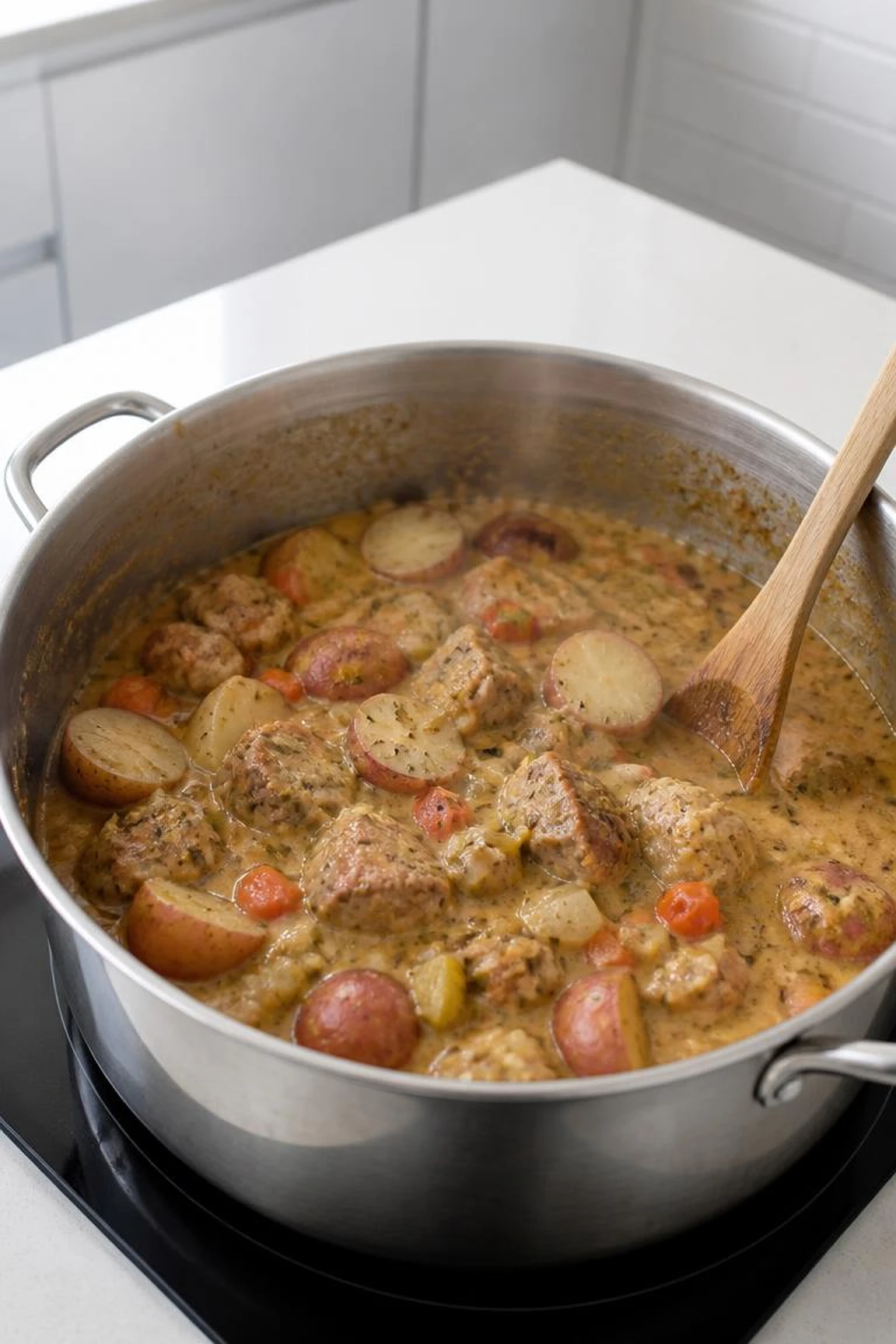
9. Add the potatoes
Cut the potatoes into halves or quarters and season them with salt and pepper. Add them to the pot and simmer gently until fork-tender, about 20 minutes.
10. Finish
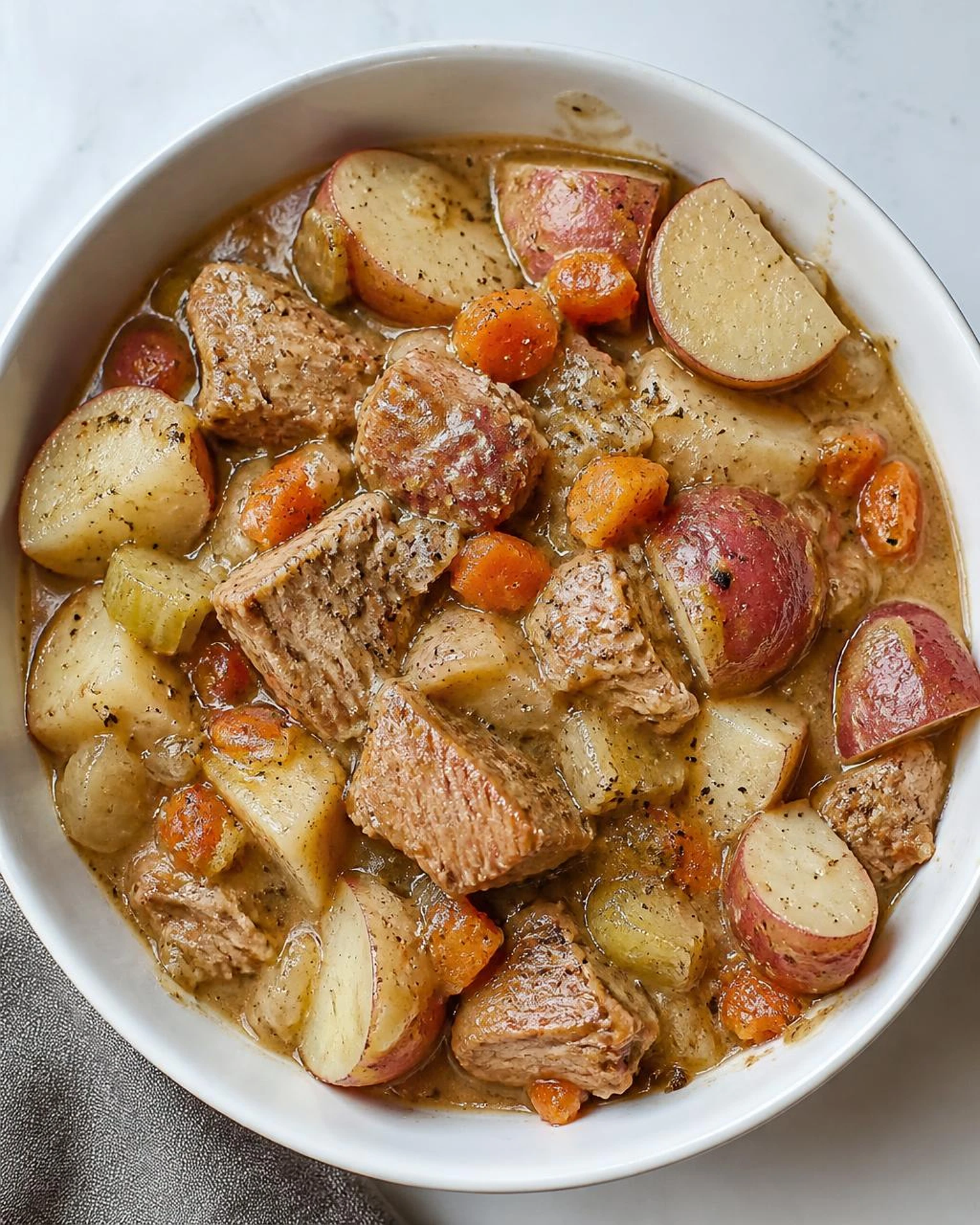
Remove the bay leaves from the pork stew. Taste, adjust the salt and pepper, and serve.
Best Cuts of Pork for Stew
| Rank | Cut | Notes |
|---|---|---|
| 1 | Pork butt (Boston butt) | The best choice. Well marbled and very tender after a slow simmer |
| 2 | Pork shoulder | Very similar, and a close second |
| 3 | Pork belly | Much richer |
| 4 | Pork cheeks | Tender, but harder to find |
For pork stew, lean cuts are not on this list for a reason. A stew needs fat and connective tissue to stay moist over an hour of cooking.
Why Pork Butt Works So Well
Despite the name, pork butt comes from the upper part of the shoulder. It is a hard-working muscle with plenty of fat running through it and a good amount of connective tissue. Cooked quickly, it is chewy. Cooked slowly in liquid, the fat melts, the connective tissue softens, and the meat becomes tender and juicy. It is also one of the least expensive cuts at the meat counter, especially on sale, which makes this an economical dinner for six.
When you cut it up, remove the large, solid pieces of fat and leave the marbling inside the meat. Aim for cubes of about an inch. Smaller pieces can dry out, and larger ones take longer to turn tender.
The 45-Second Sear
The sear in this pork stew recipe is short on purpose. Each side of the pork gets about 45 seconds in a hot pot, just long enough for the floured surface to brown. The inside stays raw. That browned crust adds flavor to the meat and leaves a layer of fond on the bottom of the pot, which the wine then dissolves. The pork finishes cooking slowly in the broth, where it can become tender. Fully cooking the pork during the sear would tighten it before the simmer even begins.
- Work in batches. Crowding drops the temperature and the pork steams.
- Add oil as you go. The flour absorbs it, which is why the recipe gives a range of 2 to 3 tablespoons.
- Do not scrub the pot. The browned layer is flavor.
Seasoning in Two Stages
The herb mix for the pork stew is divided. Half is rubbed directly onto the pork with the salt, so the meat itself is seasoned before it is floured and seared. The other half goes into the pot with the garlic, where it blooms in the butter and seasons the broth. This gives the stew flavor all the way through, not just in the gravy.
| Herb or spice | What it adds |
|---|---|
| Rosemary | Piney, woodsy flavor that suits pork |
| Thyme | Earthy and savory |
| Oregano | A slightly peppery note |
| Sage | The classic partner for pork |
| Celery salt | Savory depth |
Gentle Simmer, Not a Boil
The single most important instruction in this recipe is not to boil the stew. At a boil, the muscle fibers in the pork tighten and squeeze out their moisture, and the meat turns tough and dry. At a very gentle simmer, with only a few small bubbles breaking the surface, the pork relaxes and becomes tender. Keep the lid partially on, check the pot every 10 minutes, and turn the heat down if the bubbling picks up.
How Thick Is the Gravy?
This pork stew is thickened by the flour on the pork, the ⅓ cup of flour cooked with the vegetables, and the cream. The result is a creamy gravy with body, lighter in color than a beef stew because it is made with chicken broth and white wine. You have room to adjust it. Use a cup less broth for a thicker stew, or a cup more for a soupier one.
What the Wine, Worcestershire, Dijon and Hot Sauce Do
| Ingredient | Amount | What it adds |
|---|---|---|
| Dry white wine | ¾ cup | Acidity, and it dissolves the browned layer in the pot |
| Worcestershire sauce | 2 teaspoons | Savory depth |
| Dijon mustard | 1 teaspoon | A gentle tang that suits pork |
| Hot sauce | 1 teaspoon | A vinegary lift, without noticeable heat |
| Beef bouillon cube | 1 | A deeper, meatier broth |
A creamy stew can taste flat without a little acid and savory seasoning behind it. These ingredients work in the background. If you taste the finished stew and cannot name them, they have done their job.
Why Baby Red Potatoes?
Baby red potatoes are waxy, which means they hold their shape in liquid and have a creamy, dense texture when cooked. Their thin red skins stay on, so there is no peeling, and they add color to the bowl. Cut small ones in half and larger ones into quarters, so the pieces are all about the same size and cook in the same 20 minutes. Season them with salt and pepper before they go in. Potatoes absorb seasoning best while they cook.
Choosing a Pot
A heavy Dutch oven of about 4.5 quarts, or larger, is ideal. Thick walls hold a steady, low heat, which is exactly what a gentle simmer needs. A heavy-bottomed soup pot also works. Thin pots have hot spots where the flour can scorch during the sear and where the stew can boil even on a low flame. Whatever you use, it should have a lid you can set slightly ajar.
Stovetop or Slow Cooker?
| Stovetop | Slow cooker | |
|---|---|---|
| Active time | More. You watch the simmer | Less. Sear, then walk away |
| Cook time | About 1 hour of simmering | 7 to 8 hours on LOW, or 3 to 4 on HIGH |
| Flour in the stew | ⅓ cup, cooked with the vegetables | Skipped |
| Thickener | The flour | Optional cornstarch slurry at the end |
| Potatoes | Added for the last 20 minutes | Added at the start |
Both methods are tested. The stovetop version is ready the same evening, and the slow cooker version suits a day when you are out of the house.
How Much Does It Make?
The recipe makes six generous servings from 2½ pounds of pork and a pound of potatoes. Leftovers keep for 3 days in the fridge and reheat well, so it is a good choice for cooking once and eating twice.
Common Mistakes to Avoid
- Choosing a lean cut. It dries out. Use pork butt or shoulder.
- Crowding the pot during the sear. The pork will not brown.
- Adding the broth all at once. The flour clumps.
- Boiling. It toughens the pork.
- Adding the potatoes at the start. They fall apart after an hour.
- Forgetting the bay leaves. Take them out before serving.
Making It Ahead
Like most stews, pork stew is very good the next day. Cook it fully, cool it and refrigerate it for up to 3 days. Reheat it gently on the stove, without boiling. If you know in advance that you will freeze part of the batch, cook the potatoes only until they are just fork-tender.
Troubleshooting
| Problem | Likely cause | Fix |
|---|---|---|
| Pork is tough | The stew boiled | Keep it at a very gentle simmer the whole time |
| Pork did not brown | Pot crowded | Sear in batches with space between the pieces |
| Lumpy gravy | Broth added too quickly | Add it in small splashes and stir constantly |
| Stew is too thick | Simmered uncovered, or reduced a lot | Add up to 1 cup more broth |
| Stew is too thin | Too much liquid for your taste | Use up to 1 cup less broth next time |
| Potatoes are crumbly | Overcooked | Add them for the last 20 minutes only and stop when fork-tender |
| Gravy looks pale | Chicken broth and cream give a light color | Add a few drops of browning sauce |
Easy Swaps and Add-Ins
| Instead of, or in addition | Use |
|---|---|
| ¾ cup white wine | ¾ cup chicken broth |
| Beef bouillon cube | Chicken bouillon cube |
| 5 cups broth | 4 to 6 cups, depending on how thick you like it |
| Carrots, celery and potatoes only | Frozen peas, corn or green beans, added in the last 10 minutes |
| Plain top | Crumbled bacon as a garnish |
| Lighter color | A few drops of browning sauce for a darker gravy |
Slow Cooker Pork Stew
For the slow cooker, leave out the ⅓ cup of flour in the stew. Season, flour and sear the pork, deglaze with the wine, and soften the vegetables with the garlic and flavorings as above. Transfer the vegetable mixture to the slow cooker, scraping in all the browned residue from the pot.
Add the chicken broth, cream, bouillon cube and bay leaves, then the seared pork with its juices and the potatoes, cut and seasoned. Cook on LOW for 7 to 8 hours, which is recommended, or on HIGH for 3 to 4 hours.
To thicken, mix 3 tablespoons of cold water with 3 tablespoons of cornstarch, stir it in and let the stew stand. Remove the bay leaves and adjust the seasoning.
Storage and Freezing
- Refrigerate: leftover pork stew in an airtight container for up to 3 days.
- Freeze: for up to 3 months. If you plan to freeze it, do not overcook the potatoes, or they can turn crumbly when reheated.
- Reheat: leftovers reheat well. Warm them gently and avoid boiling.
Pork should reach a safe internal temperature, and leftovers should be reheated to 165°F. See the safe minimum internal temperature chart on FoodSafety.gov.
What to Serve With Pork Stew
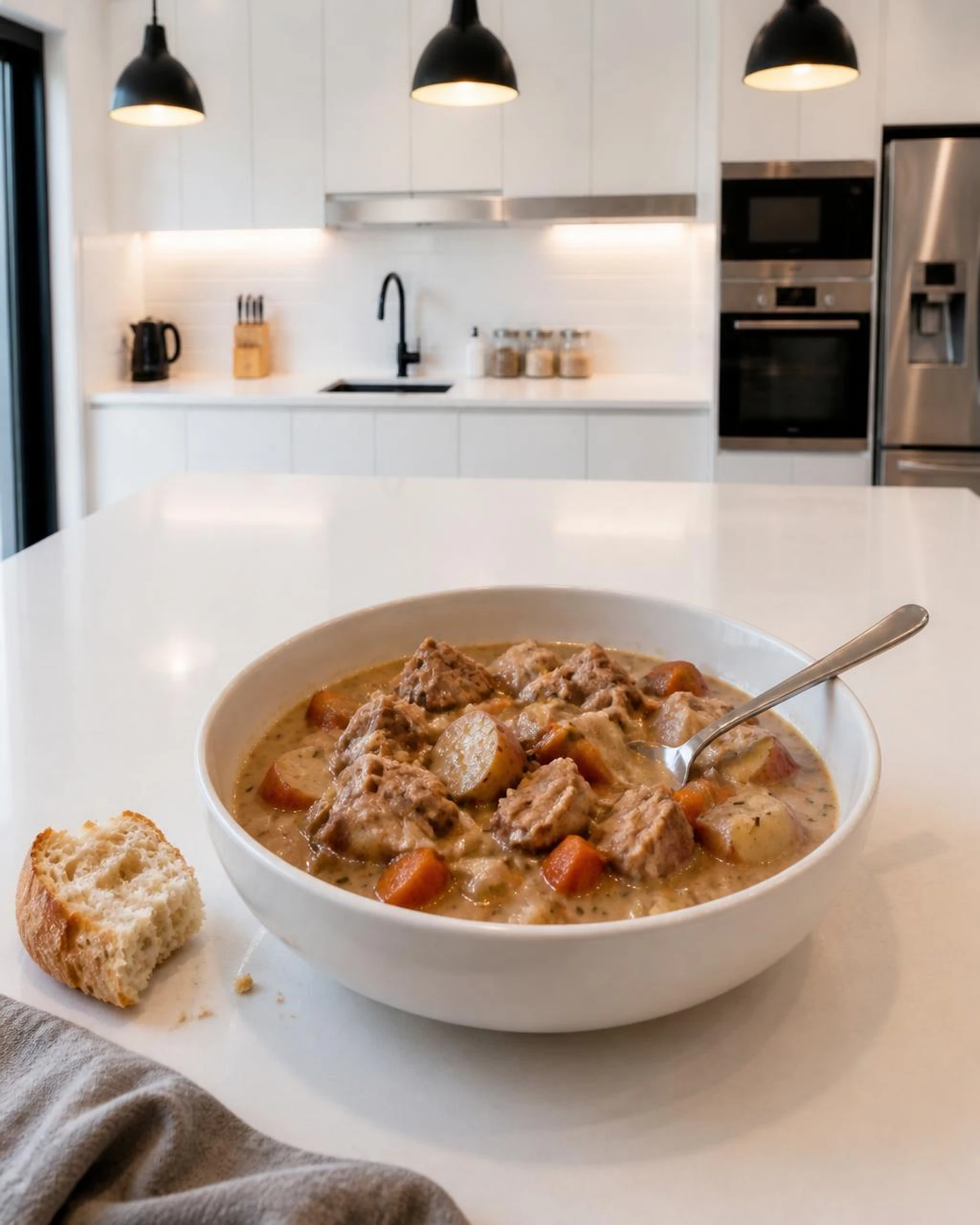
Pork stew is a complete meal, with meat, potatoes and vegetables in one bowl. Bread is the natural side. A wedge of skillet cornbread or a piece of crusty bread is ideal for the gravy.
More stews and soups: slow cooker beef stew, classic beef stew, beef stroganoff soup and kielbasa potato soup.
For a faster pork dinner, try this roasted pork tenderloin, seared and roasted in about 15 minutes.
Pork Stew FAQ
What cut of pork is best for pork stew?
Pork butt, also called Boston butt. Pork shoulder is the second choice.
How long does pork stew take to cook?
The pork simmers for 40 minutes, then the potatoes are added and it cooks for about 20 minutes more.
Why is my pork tough?
The stew was probably boiling. Pork stew should cook low and slow, at a very gentle simmer.
Can I make pork stew in a slow cooker?
Yes. Skip the ⅓ cup of flour, and cook on LOW for 7 to 8 hours or HIGH for 3 to 4 hours. Thicken at the end with a cornstarch slurry if you like.
Can I make it without wine?
Yes. Pork stew works without wine. Replace the white wine with chicken broth.
Do I peel the potatoes?
No. In this pork stew with potatoes, baby red potatoes go in with their skins on, cut into halves or quarters.
Is the stew spicy?
No. One teaspoon of hot sauce adds depth, not heat. You do not taste it directly.
What vegetables can I add?
For pork stew, frozen peas, corn or green beans work well, added during the last 10 minutes or so.
Can I freeze pork stew?
Yes, for up to 3 months. Keep the potatoes just tender so they do not crumble after freezing.
How do I make the gravy darker?
Stir in a few drops of browning sauce at the end.
Pork Stew
Ingredients
Method
- Combine the seasonings in a small bowl.
- Cut the pork into 1-inch cubes and discard large pieces of fat. Rub with the salt and half of the seasoning mix. Sprinkle with 3 tablespoons flour and toss to coat.
- Heat 1 tablespoon olive oil in a Dutch oven over medium-high heat. Brown the pork in batches, about 45 seconds per side, adding oil as needed. The centers should still be uncooked. Set aside.
- Turn off the heat, add the wine, then set the heat to medium. Scrape the bottom and sides of the pot and reduce the wine by half, about 6 minutes.
- Add the butter, onion, carrots and celery. Cook about 5 minutes.
- Add the garlic, Worcestershire, Dijon, hot sauce and remaining seasonings. Stir in ⅓ cup flour and cook 2 minutes.
- Add the chicken broth in small splashes, stirring constantly, then the cream. Add the bouillon cube and bay leaves. Bring to a boil, then reduce to a simmer.
- Return the pork and its juices to the pot. Simmer very gently, partially covered, for 40 minutes, stirring occasionally. Do not boil.
- Season the cut potatoes with salt and pepper and add them. Simmer gently until fork-tender, about 20 minutes.
- Remove the bay leaves, adjust the salt and pepper, and serve.
2 thoughts on “Pork Stew”